



Altitude
7129m

Co-ordinates
27°52′18″N, 86°58′48″E

Duration
33 Days

Best Season
Spring and Autumn

Activity
Mountaineering Expedition

Trip Grade
Strenuous/Hard
Baruntse
Looming at 7,129 metres, Baruntse sits at the epicentre of Nepal’s greatest mountain terrain, wedged between Lhotse, Makalu, and the Barun, Imja, and Hunku glaciers in the heart of the Khumbu region.
The summit is the centrepiece. Everest, Lhotse, Makalu, Cho Oyu, and Ama Dablam are the most celebrated peaks on Earth, visible all at once from a single point. Few climbers ever stand here. Fewer still fully appreciate what they are looking at.
Getting there means ten days on foot through the wild Hinku and Hunku valleys, past glacial lakes and remote terrain that sits just one valley away from the Everest trail yet feels a world apart. The route follows steep ice and snow slopes rated AD+, demanding prior high-altitude experience and a genuine commitment to the climb.
For mountaineers ready to step into serious 7,000m territory, Baruntse is the natural first move.
Upon arrival at Tribhuvan International Airport, complete Nepal immigration and visa formalities. Our expedition representative will warmly welcome you and escort you to your deluxe hotel in Kathmandu. The remainder of the day is at leisure to rest, recover from international travel, and prepare mentally for the expedition ahead.
This day is reserved for expedition briefings, detailed itinerary review, and final equipment checks with the expedition leader and Sherpa team. Necessary permits are finalized, and last-minute gear shopping or rentals can be arranged. This is also an important day for rest, hydration, and adjustment before entering the Khumbu region.
An early morning scenic flight takes you to Lukla, offering breathtaking aerial views of the Himalayas. After meeting the trekking crew, the expedition begins with a short but steady ascent through alpine forests to Chutanga. This gentle trek helps initiate acclimatization while introducing the remote eastern Khumbu landscapes.
Today involves a challenging and rewarding crossing of the Zatrwa La Pass. The ascent offers spectacular panoramic views of surrounding Himalayan peaks. After crossing the pass, the trail descends gradually to Thuli Kharka, a high alpine meadow used by seasonal herders. Overnight camping.
Descending into the pristine Hinku Valley, the trail follows riverbanks and dense rhododendron and pine forests. Kothe is a small seasonal settlement and an important stop along the Makalu–Barun trekking corridor. The lower altitude provides a welcome recovery after the high pass crossing.
The route continues up the Hinku Valley with increasing alpine terrain and impressive glacial scenery. As altitude increases, the landscape becomes more dramatic and remote. Thangnak sits beneath towering peaks and glaciers, offering a true high-mountain wilderness atmosphere.
A gradual ascent leads to Khare, the final settlement before entering the Baruntse climbing zone. Surrounded by icefalls and high peaks, Khare is a key acclimatization stop. The afternoon is spent resting, hydrating, and preparing for higher elevations.
A critical acclimatization day to allow the body to adapt to altitude. Optional acclimatization hikes toward nearby ridges or glaciers may be undertaken under guide supervision. Equipment checks and final preparations for the approach to Base Camp are completed.
The trail traverses glacial moraines and high alpine terrain as the expedition moves deeper into the Barun Valley. Kongma Dingma is a remote campsite offering stunning views of surrounding peaks and glaciers, reinforcing the expedition’s isolated and adventurous nature.
Today’s trek leads to Seto Pokhari, a high-altitude glacial lake nestled among towering ice walls. The environment becomes increasingly rugged, and altitude awareness is essential. Overnight camping in a dramatic alpine setting.
A short but demanding ascent brings the team to Baruntse Base Camp. Upon arrival, Base Camp is established with full expedition facilities, including dining tents, communication systems, and medical support. The remainder of the day is spent resting and organizing climbing equipment.
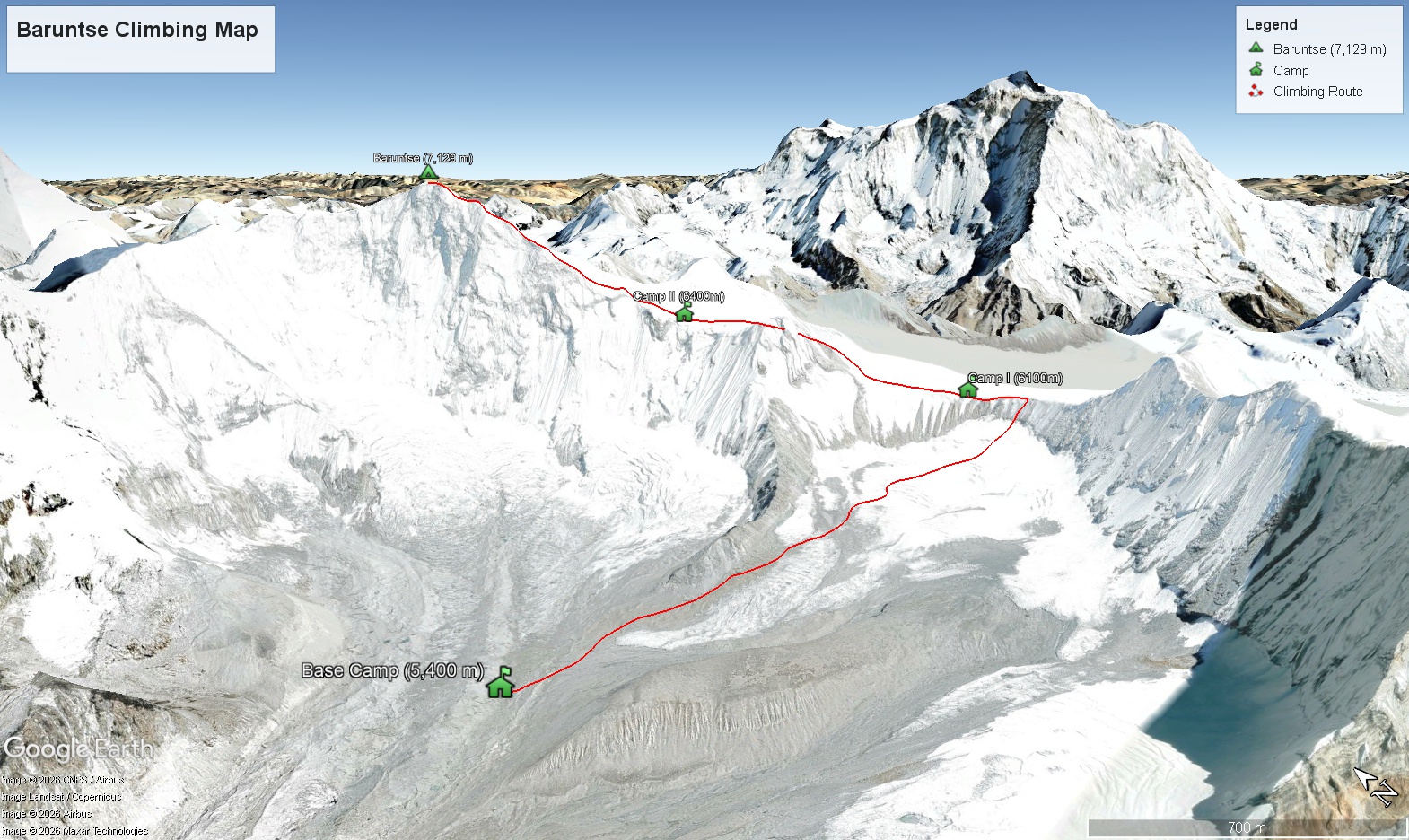
This extended period is dedicated to acclimatization rotations, route fixing, and summit attempts. Climbers ascend through a series of high camps established on snow and ice slopes, guided by experienced high-altitude Sherpas. The summit of Baruntse offers breathtaking views of Everest, Lhotse, Makalu, and the vast Himalayan expanse. Multiple summit windows are planned to maximize safety and success before returning to Base Camp.
After completing the climb, the expedition moves toward Amphu Lapcha Base Camp, preparing for one of the most technical and spectacular high passes in the Himalayas. The route traverses glacial terrain with outstanding mountain views.
An early alpine start is required to cross the challenging Amphu Lapcha Pass using fixed ropes and technical equipment. After reaching the pass, the trail descends steeply into the Imja Valley, eventually reaching Chukhung. This is one of the most memorable days of the expedition.
Re-entering the main Everest trail, the trek descends through familiar Sherpa villages and landscapes. Arrival in Namche Bazaar offers comfort, warm lodges, and opportunities to celebrate the expedition’s success.
The final trekking day follows the Dudh Koshi River back to Lukla. In the evening, a farewell dinner with the trekking and climbing crew marks the conclusion of the Himalayan journey.
Morning flight from Lukla to Kathmandu. Upon arrival, transfer to your hotel. The remainder of the day is free for rest, shopping, or optional sightseeing.
Transfer to Tribhuvan International Airport for your onward international flight, marking the end of a challenging and rewarding Baruntse Expedition.
Package details
What's Included
- Airport pick up and drops off.
- Three meals during trek.
- Three meals everyday during trekking.
- Room service in tea houses during trekking.
- Mountain climbing permit.
- Guide and Porter’s food, accommodation, insurance, equipment etc.
- Domestic flight two way.
- Team gear and equipment
- Garbage charges etc.
What's not Included
- Your international flight ticket
- Lunch and Dinner in Kathmandu.
- Hot showers charges.
- Extra drinks: as like cold drinks cola, sprite, beer, hot water, and bakery items.
- Local entry fee and donations:- as like school, monastery temples etc.
- Guide and porter tips etc.
Book Now
Our experienced guides and expedition team are ready to plan your Baruntse adventure. Fill out the form and we’ll get back to you within 24 hours with a tailored proposal.