


Altitude
7861m

Co-ordinates
27°57′59″N, 86°53′24″E

Duration
37 days

Best Season
Spring and Autumn

Activity
Mountaineering Expedition

Trip Grade
Extreme / Technical
Nuptse
Guarding at 7,861 metres, Nuptse stands just two kilometres southwest of Everest, a massive wall of ice and rock that dominates the Khumbu skyline and blocks Everest from view for much of the approach. The Tibetan name says it plainly: west peak.
The summit is rare. Fewer than 25 climbers have ever stood on top. Everest, Lhotse, Makalu, Cho Oyu, and the entire Khumbu spread below a view almost no one on Earth has seen from this angle.
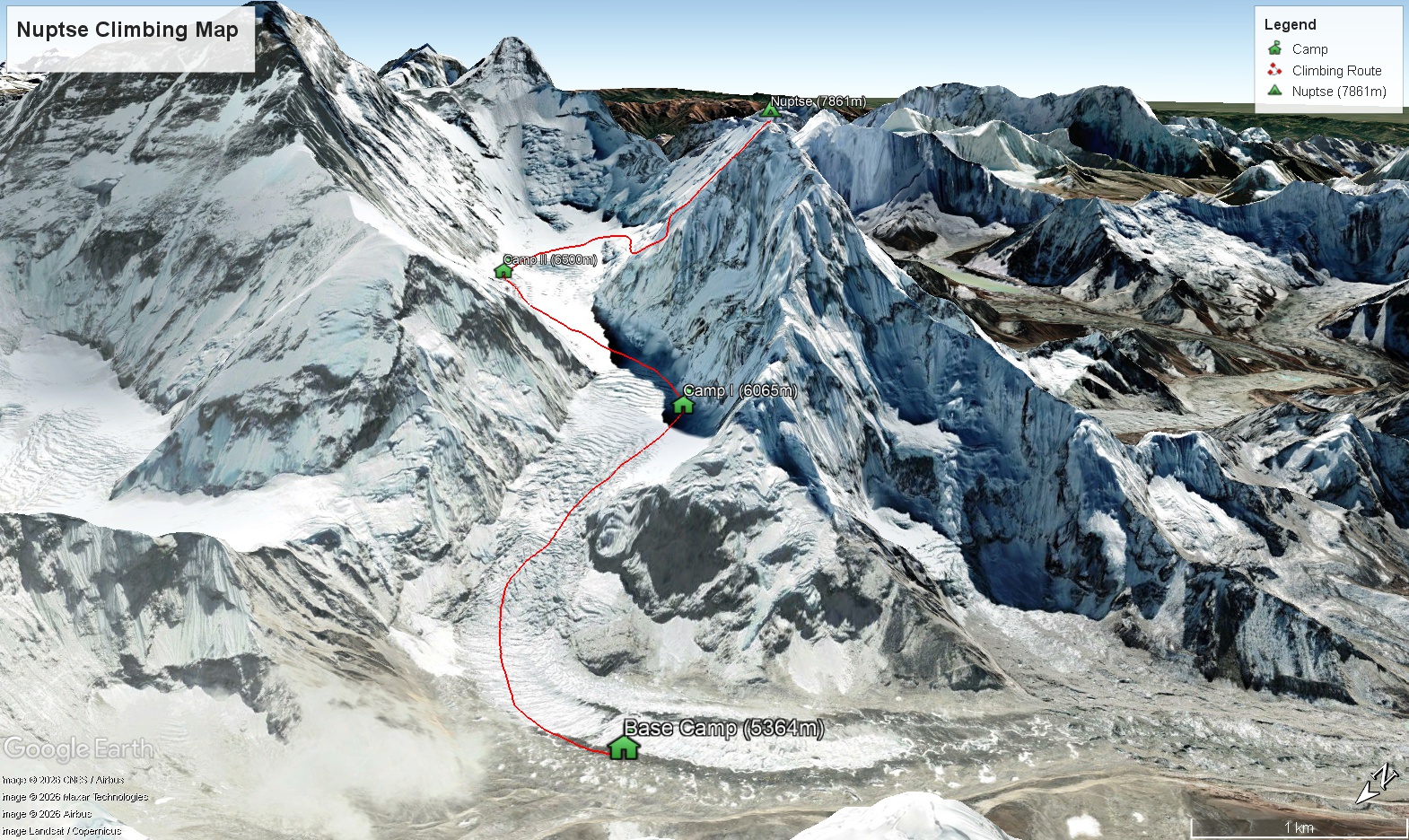
Getting there follows the Everest Base Camp route through Namche Bazaar, Tengboche, and Lobuche before the Khumbu Icefall begins. The route shares the same path as Everest up to Camp II then breaks away onto Nuptse’s north ridge, where steep ice slopes of 50 to 70 degrees and near-vertical sections demand elite technical skill.
This is not a peak for ambition alone. Nuptse is considered more technically demanding than Everest itself, and it asks everything of those who attempt it.
Upon arrival at Tribhuvan International Airport, complete immigration and visa formalities before proceeding to baggage claim. Our representative will meet you in the arrivals hall and escort you to your hotel in Kathmandu. Following check-in, the remainder of the day is at leisure to rest and acclimatize. An expedition briefing will be conducted in the evening.
Day reserved for expedition preparation and permit processing, including climbing permits and Sagarmatha National Park documentation. Comprehensive gear inspection ensures all equipment meets safety standards. Detailed expedition briefing covers route planning, acclimatization schedule, safety protocols, and emergency procedures.
Early morning flight to Lukla offers spectacular Himalayan views. Upon arrival, meet the trekking crew and commence the trek along the Dudh Koshi River, passing traditional Sherpa villages and Buddhist monuments. Arrive at Phakding for overnight lodge accommodation.
The trail follows the Dudh Koshi River, crossing suspension bridges including the Hillary Bridge. Enter Sagarmatha National Park at Monjo and ascend through pine forests to Namche Bazaar, the Khumbu region’s commercial hub, where first views of Everest may appear. Overnight at lodge.
A crucial acclimatization day to adjust to altitude. Optional hikes to Everest View Hotel or nearby ridges offer panoramic views of Everest, Lhotse, Nuptse, Ama Dablam, and Thamserku. The day is dedicated to rest, hydration, and exploring Namche’s markets and local amenities.
The trail traverses high above the Dudh Koshi River, offering stunning views of Everest, Nuptse, and Ama Dablam. Descend to Phunki Tenga, then ascend through rhododendron forests to Tengboche. Visit Tengboche Monastery, the spiritual center of the Khumbu region. Overnight at lodge.
The trek continues through alpine terrain, crossing the Imja Khola and passing Sherpa villages including Pangboche. Vegetation becomes increasingly sparse with elevation gain. Dingboche is situated in a wide valley offering impressive views of Ama Dablam and surrounding peaks. Overnight at lodge.
Another important acclimatization day. Optional hikes to Nangkartshang Peak or nearby ridges help improve altitude adaptation while offering dramatic mountain views. The afternoon is reserved for rest, hydration, and preparation for higher elevations.
The trail ascends gradually along glacial moraines, passing the memorials of fallen climbers at Thukla Pass. Continue toward Lobuche with expansive views of Nuptse, Pumori, and Lobuche Peak. Overnight at a lodge.
A short but demanding trek over rocky glacial terrain leads to Nuptse Base Camp. Upon arrival, the expedition team establishes camp with tents, kitchen, and communication facilities. The remainder of the day is spent resting and organizing climbing equipment. Overnight at base camp.
These days are dedicated to acclimatization, rest, and technical training. Climbers practice fixed rope techniques, ice axe use, crampon skills, glacier travel, and crevasse rescue. Load carries and short rotations may be conducted on lower sections of the route to prepare for higher camps.
The first rotation begins with a climb through snow and ice terrain toward Camp I. Fixed ropes may be used in steeper sections. Upon arrival, establish camp and rest while adapting to the higher altitude.
Continue ascending through technical terrain involving snow slopes and crevassed areas. Camp II is established in a strategic location for further acclimatization. Overnight at Camp II.
A full rest day to allow the body to adapt to altitude. Short acclimatization walks may be conducted. Hydration and nutrition are closely monitored.
Descend carefully back to Base Camp, allowing the body to recover after the first rotation. This descent significantly aids acclimatization.
After completing the rotation, descend through Dingboche, Tengboche, and Namche Bazaar. Depending on conditions and logistics, climbers may fly back to Kathmandu for extended rest and recovery before the final summit push.
Fly or trek back to Everest Base Camp area and rejoin the expedition team. Final equipment checks, weather briefings, and mental preparation are completed.
Re-ascend to Camp I and Camp II. One day is reserved for rest and recovery before moving higher.
A challenging climb involving steep snow and ice sections. Camp III is established high on the mountain. Oxygen may be used depending on strategy
An early alpine start for the summit push. The final ascent involves technical climbing on steep snow and ice. From the summit, enjoy extraordinary views of Everest, Lhotse, Makalu, and the entire Khumbu range. After a successful summit, descend carefully to Camp II.
Continue descending safely back to Base Camp, marking the completion of the climbing phase.
Participate in cleaning Base Camp, ensuring all waste is properly managed in accordance with environmental regulations
Begin the return trek through familiar landscapes as altitude decreases, improving comfort and recovery. Overnight at a lodge.
Descend through Pangboche and Tengboche forests to Namche Bazaar. Celebrate the successful expedition.
A long but scenic final trekking day following the Dudh Koshi River. Overnight at a lodge in Lukla.
Early morning flight back to Kathmandu. Transfer to hotel and enjoy a well-earned rest.
Free day for rest, sightseeing, souvenir shopping, or a farewell dinner with the expedition team.
Free day for rest, sightseeing, souvenir shopping, or a farewell dinner with the expedition team.
Package details
What's Included
- Airport pick up and drops off.
- Three meals during trek.
- Three meals everyday during trekking.
- Room service in tea houses during trekking.
- Mountain climbing permit.
- Guide and Porter’s food, accommodation, insurance, equipment etc.
- Domestic flight two way.
- Team gear and equipment
- Garbage charges etc.
What's not Included
- Your international flight ticket
- Lunch and Dinner in Kathmandu.
- Hot showers charges.
- Extra drinks: as like cold drinks cola, sprite, beer, hot water, and bakery items.
- Local entry fee and donations:- as like school, monastery temples etc.
- Guide and porter tips etc.
Book Now
Our experienced guides and expedition team are ready to plan your Nuptse adventure. Fill out the form and we’ll get back to you within 24 hours with a tailored proposal.