

Altitude
6419m

Co-ordinates
28°44'36" N, 84°01'30" E

Duration
13 Days

Best Season
Spring and Autumn

Activity
Peak Climbing

Trip Grade
Moderate to Difficult
Chulu West Peak Climbing
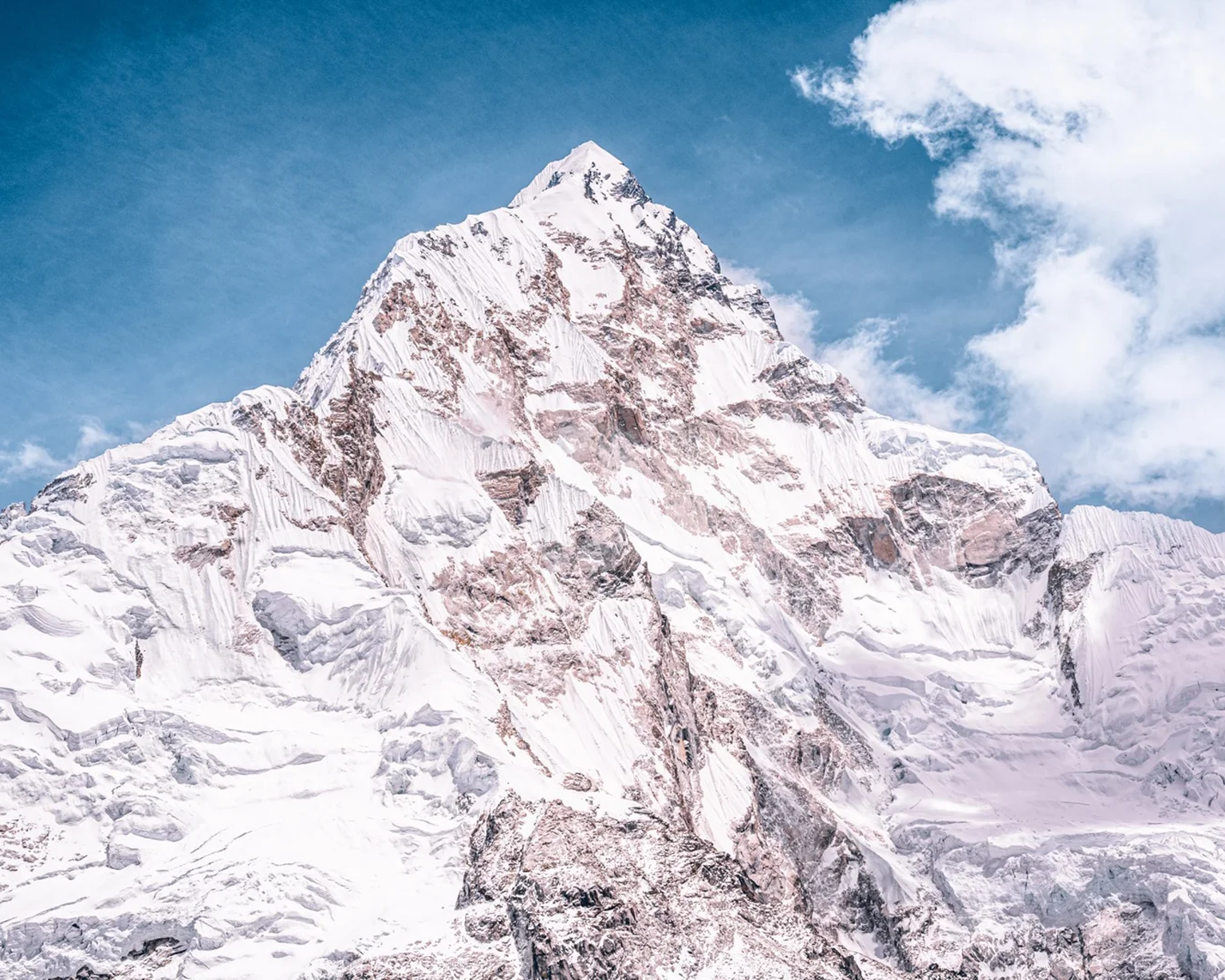
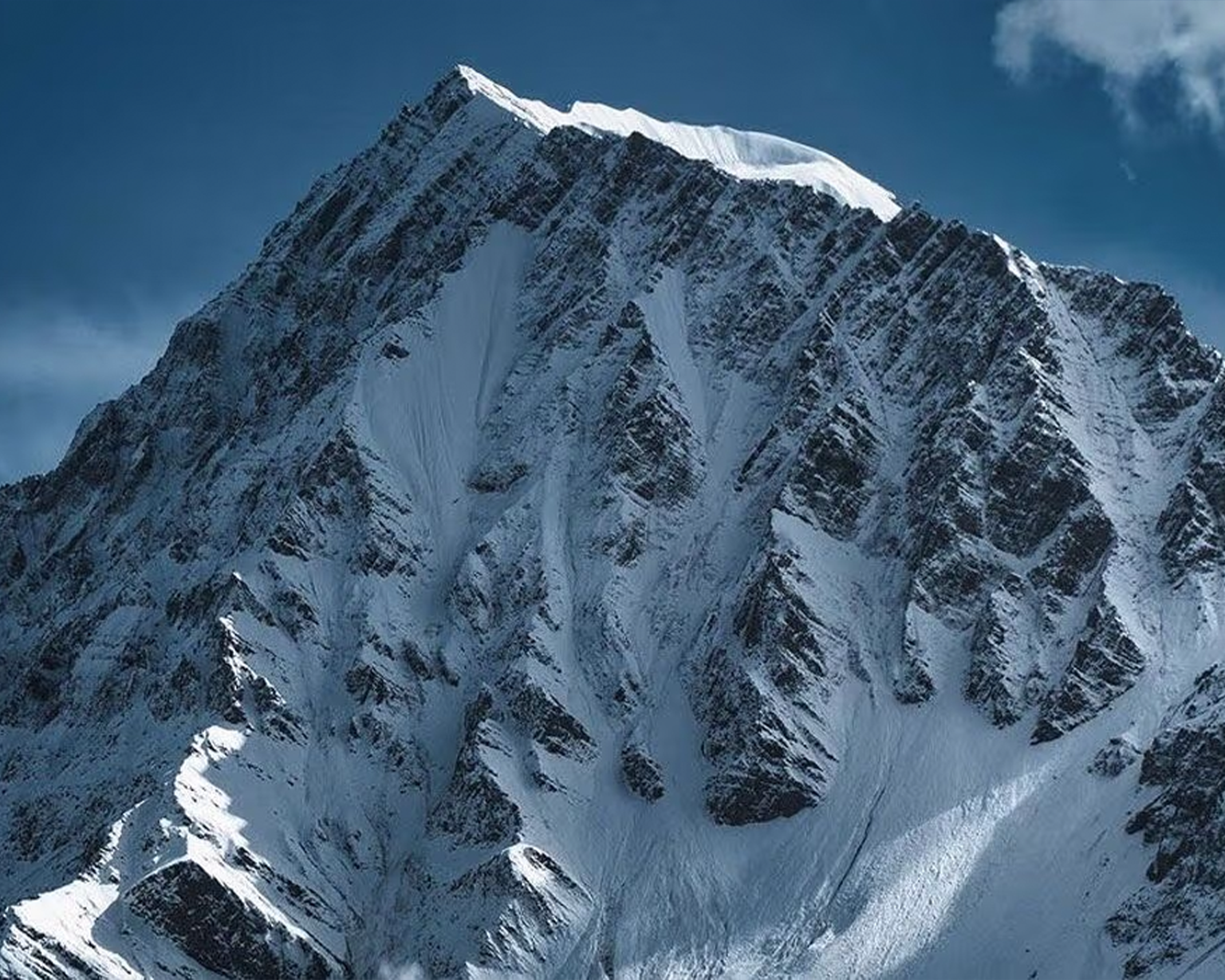
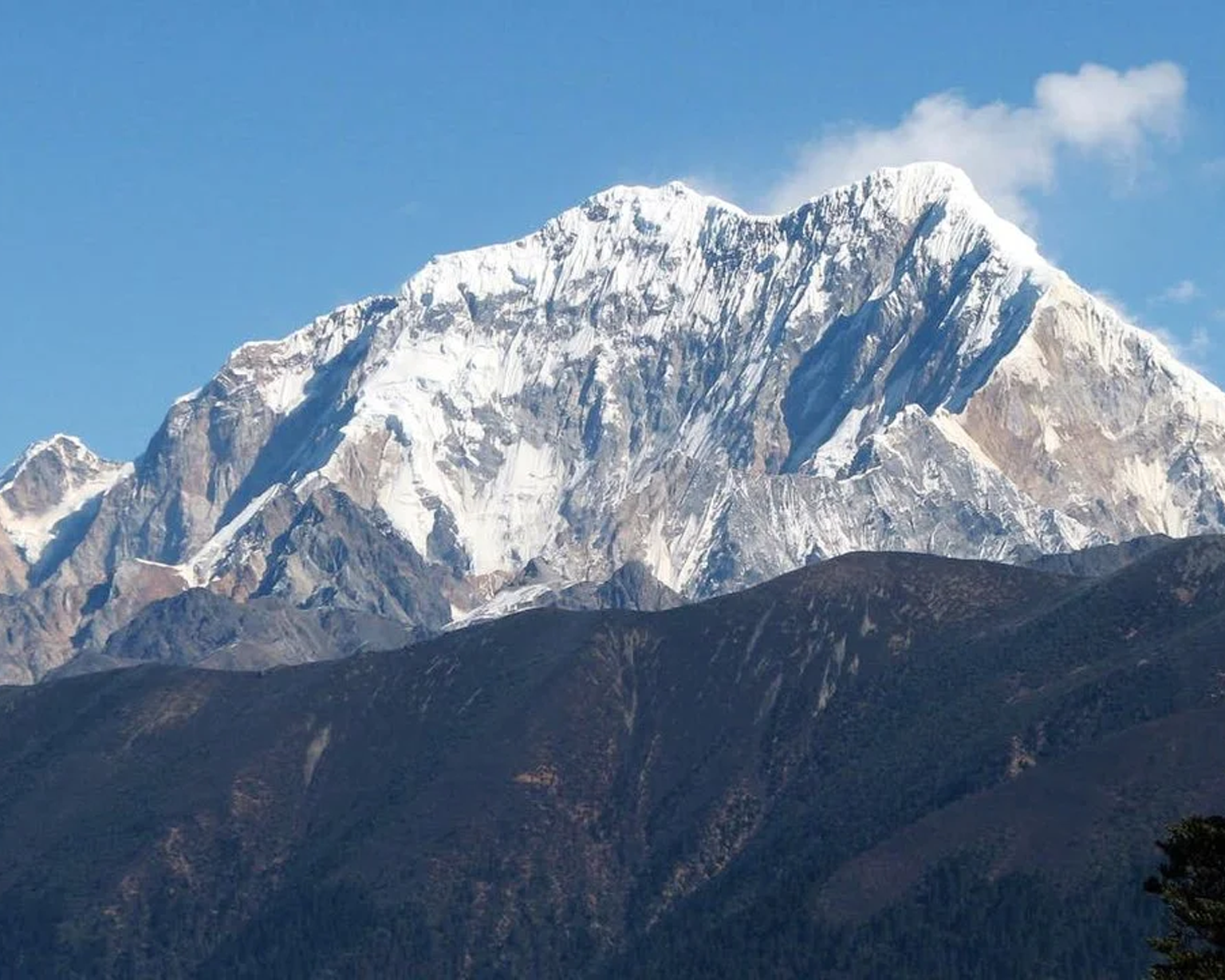
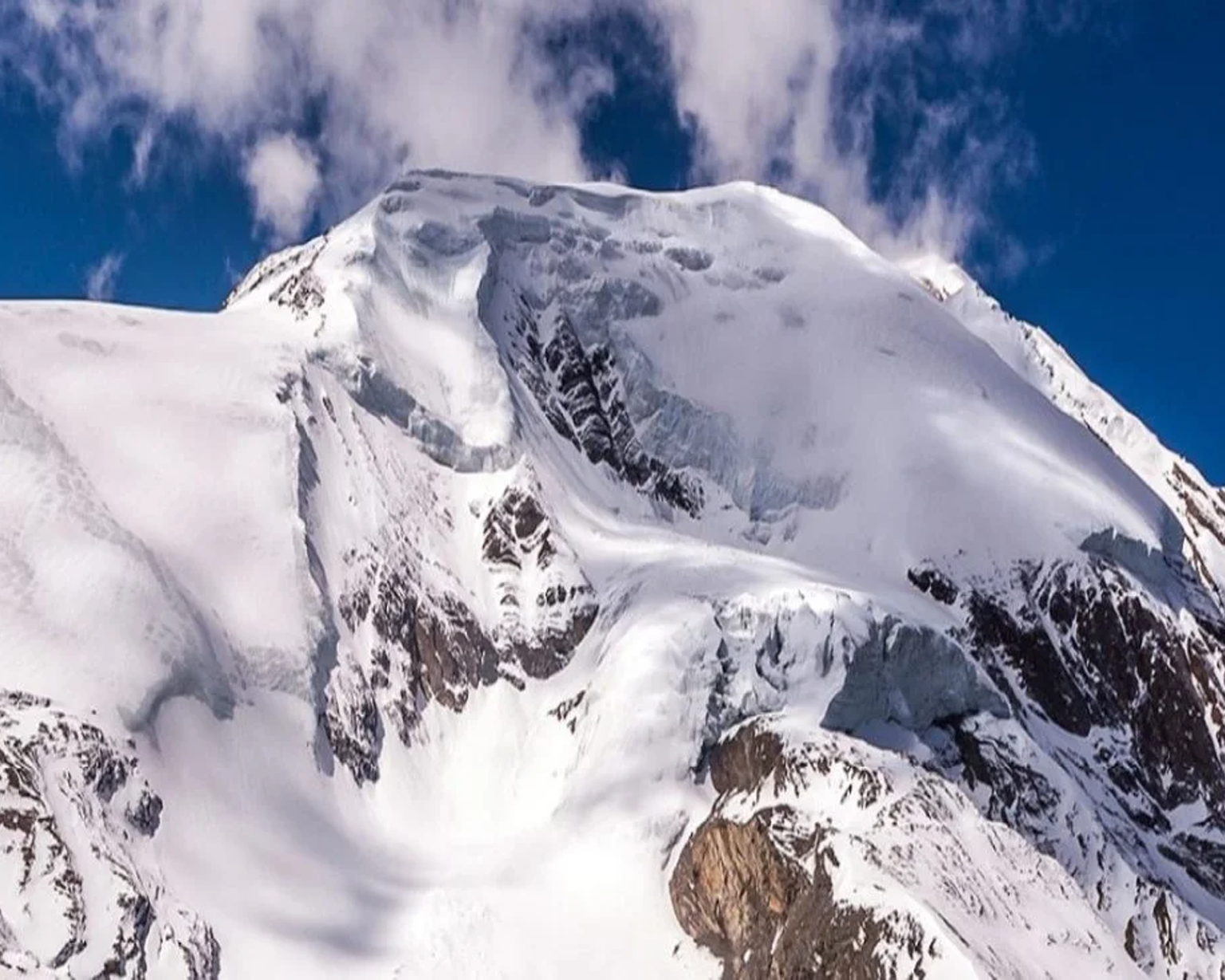
Chulu West Peak (6,419m) is a trekking peak in the Annapurna region. It is a step up from Chulu East and works well for those already doing the Annapurna Circuit.
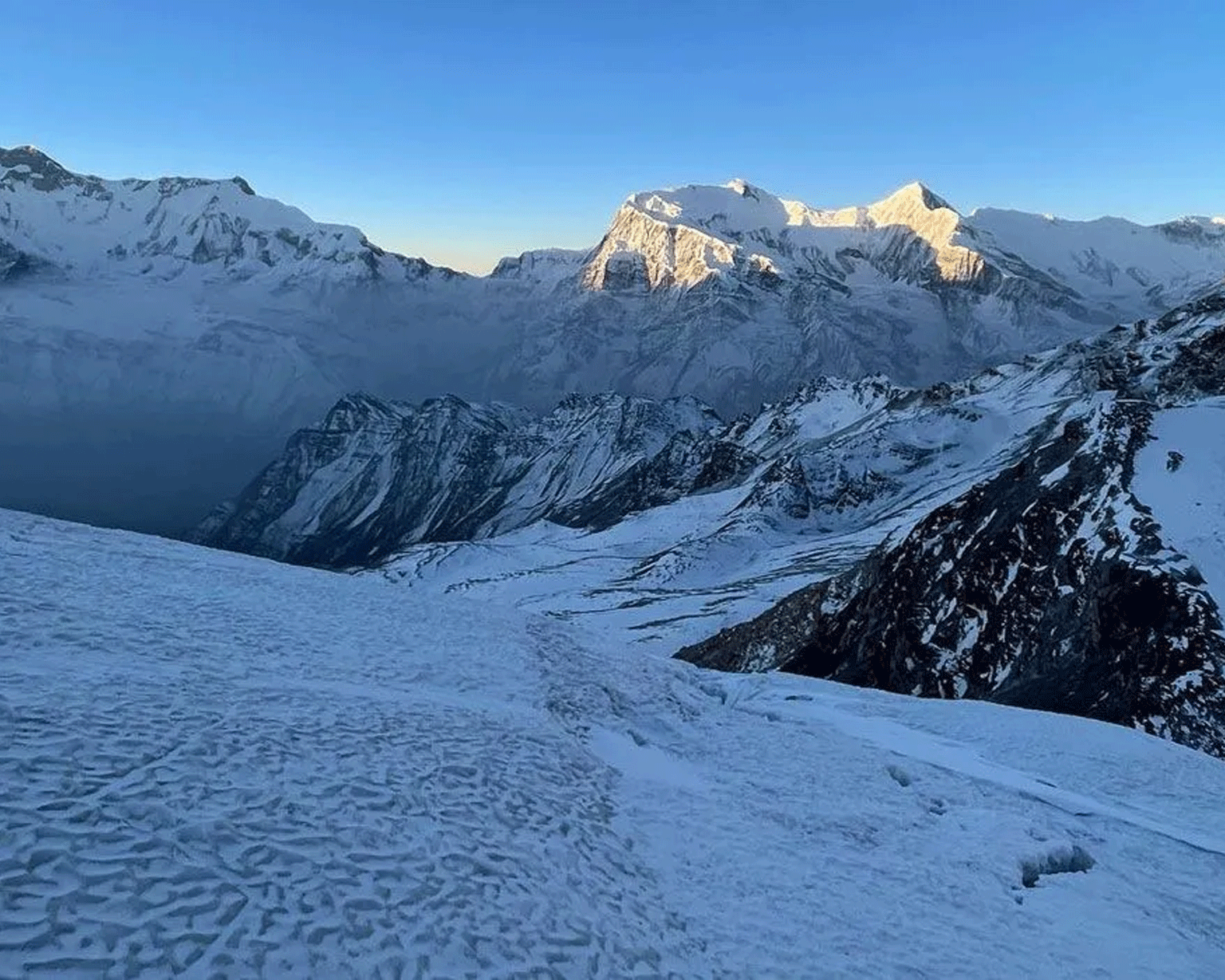
The route runs through Manang, stone villages, dry valleys, and open alpine ground. Higher up, the terrain changes. Glaciers and steep snow slopes make this feel like a proper climb.
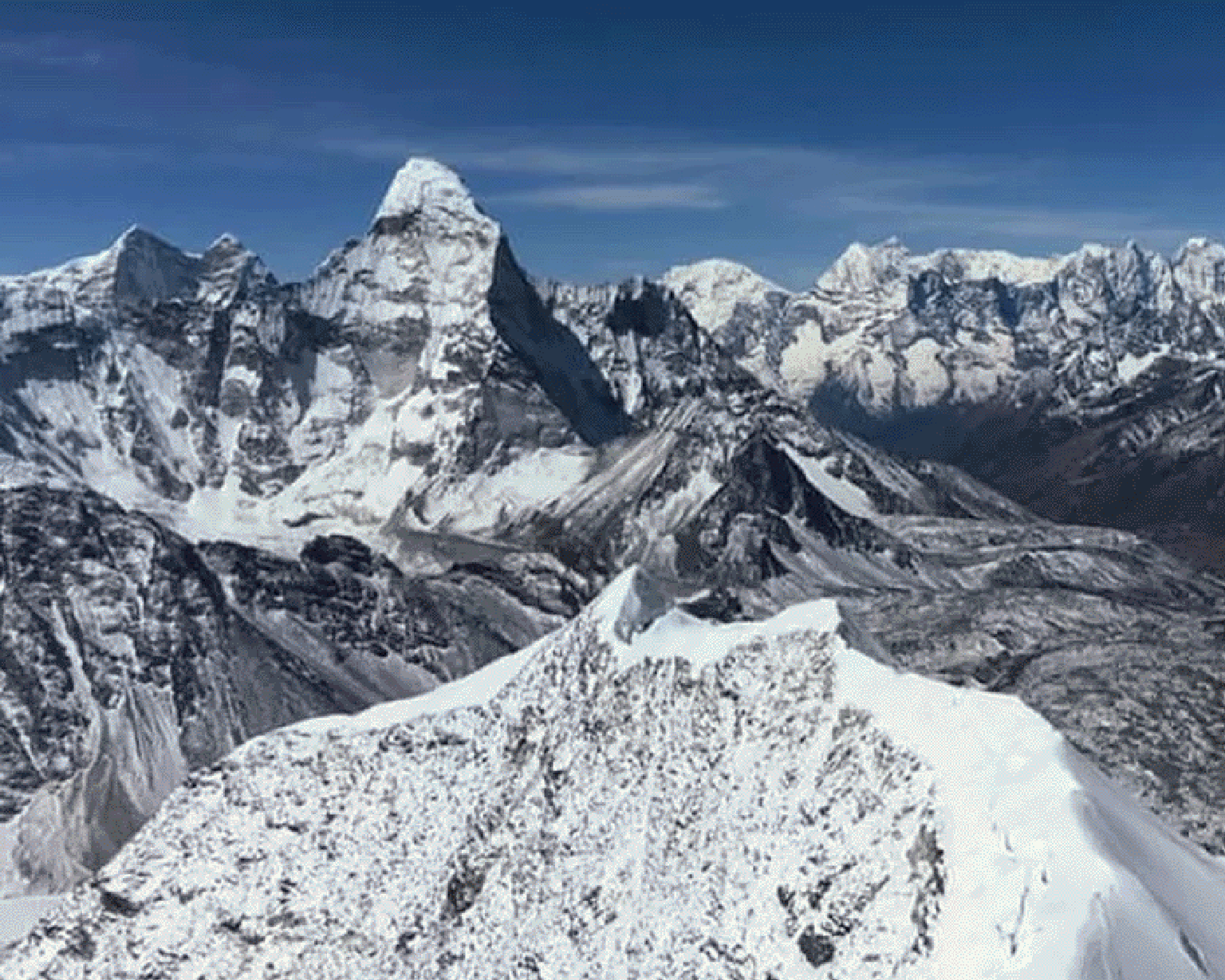
From the top, you see Dhaulagiri, Annapurna, and Nilgiri spread across the skyline.
This peak is not the hardest, but it is not easy either. Good fitness and proper acclimatization are what get you to the summit.
Upon arrival at Tribhuvan International Airport (TIA), complete Nepal entry visa formalities at the immigration counter. Our representative will welcome you at the arrivals hall and assist with your transfer to a comfortable hotel in Kathmandu. After check-in, the remainder of the day is free to rest, freshen up, and recover from your journey.
This day is dedicated to expedition preparation and recovery after international travel. Our team completes all necessary permit formalities while climbers undergo a detailed equipment check to ensure all personal and technical gear meets expedition standards. A comprehensive briefing is conducted by the expedition leader, covering route details, safety protocols, acclimatization plans, and logistics. Final adjustments and last-minute preparations are completed before heading to the Annapurna region.
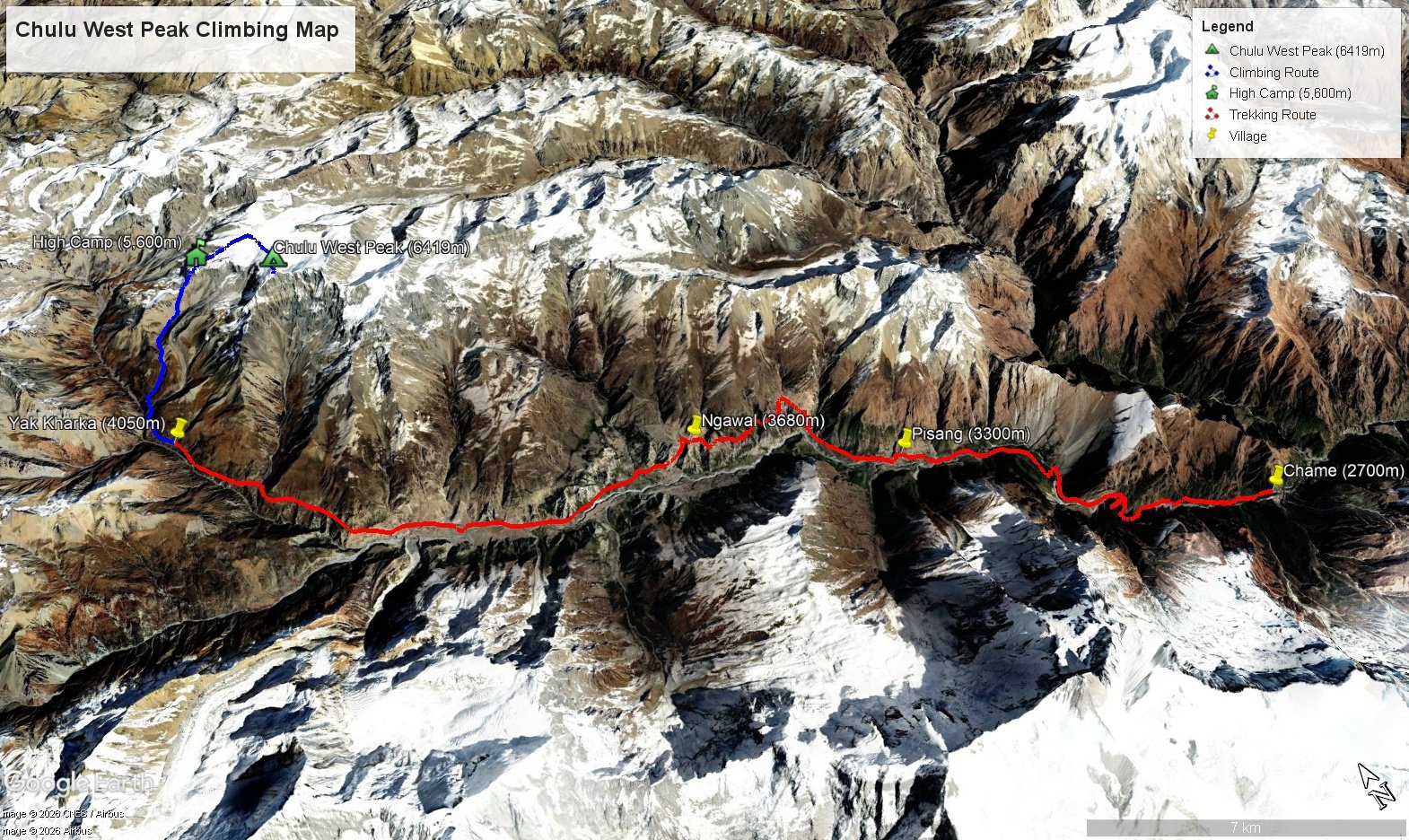
An early morning drive takes you from Kathmandu to Chame, the administrative headquarters of Manang district. The scenic journey follows rivers, terraced hillsides, and traditional villages, gradually transitioning into alpine landscapes. Upon arrival in Chame, check into the lodge and rest while enjoying views of surrounding peaks and hot springs nearby.
The trek begins along a forested trail through pine and fir forests, following the Marshyangdi River. Passing apple orchards and small settlements, the trail opens into a broader valley with impressive views of Annapurna II and Pisang Peak. Overnight stay in Pisang, a traditional village with stone houses and monasteries.
Today’s trek follows the upper Pisang route, offering spectacular panoramic views of Annapurna II, III, IV, Gangapurna, and Tilicho Peak. The trail gradually ascends through dry alpine terrain and traditional villages before reaching Ngawal. This culturally rich village provides an excellent setting for acclimatization
A crucial acclimatization day to allow the body to adjust to increasing altitude. Optional short hikes to nearby ridges offer stunning mountain views while supporting proper acclimatization. The remainder of the day is spent resting, hydrating, and preparing for higher elevations, with health monitoring by the expedition team.
Leaving Ngawal, the trail traverses high alpine pastures and barren landscapes with expansive views of the surrounding Himalayan peaks. As vegetation becomes sparse, the air grows thinner, and the pace slows. Yak Kharka, a seasonal grazing area, provides a quiet overnight stop crucial for continued acclimatization
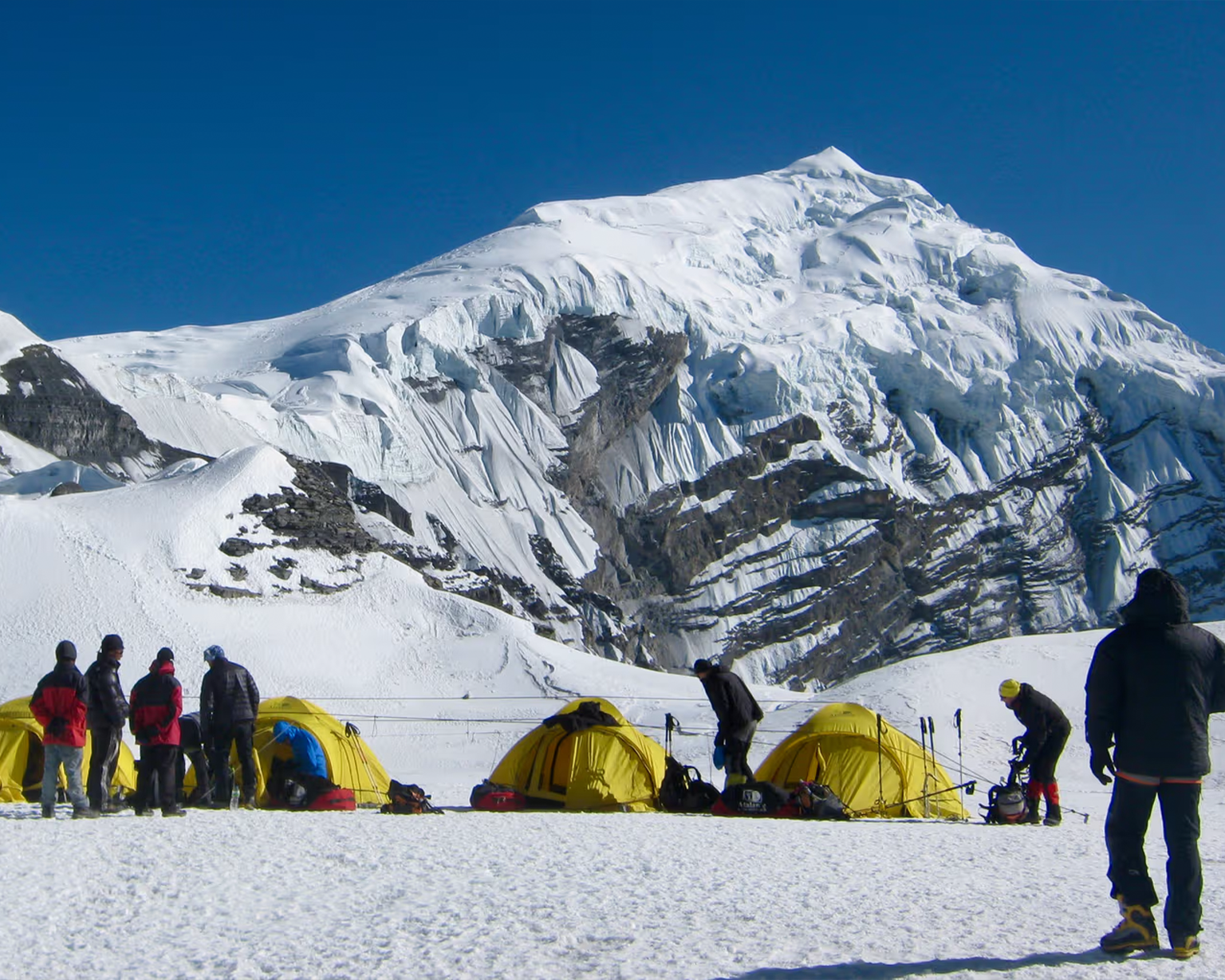
Today’s ascent leads into remote and rugged terrain as the trail climbs steadily toward Chulu West High Camp. The environment becomes increasingly glaciated, and the views more dramatic. Upon reaching High Camp, the team sets up camp and prepares equipment for the summit attempt. Early dinner and rest are essential for the following day’s climb.
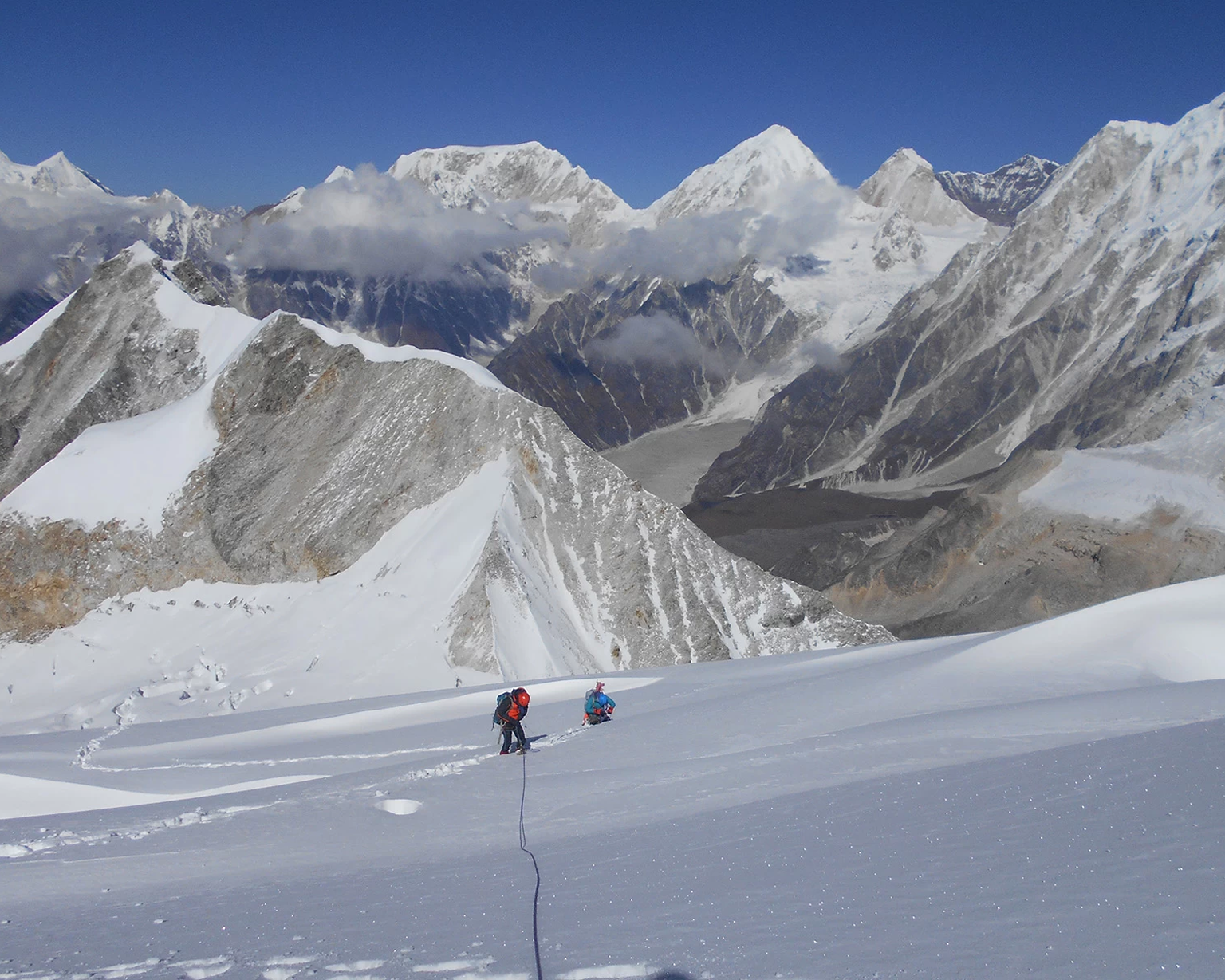
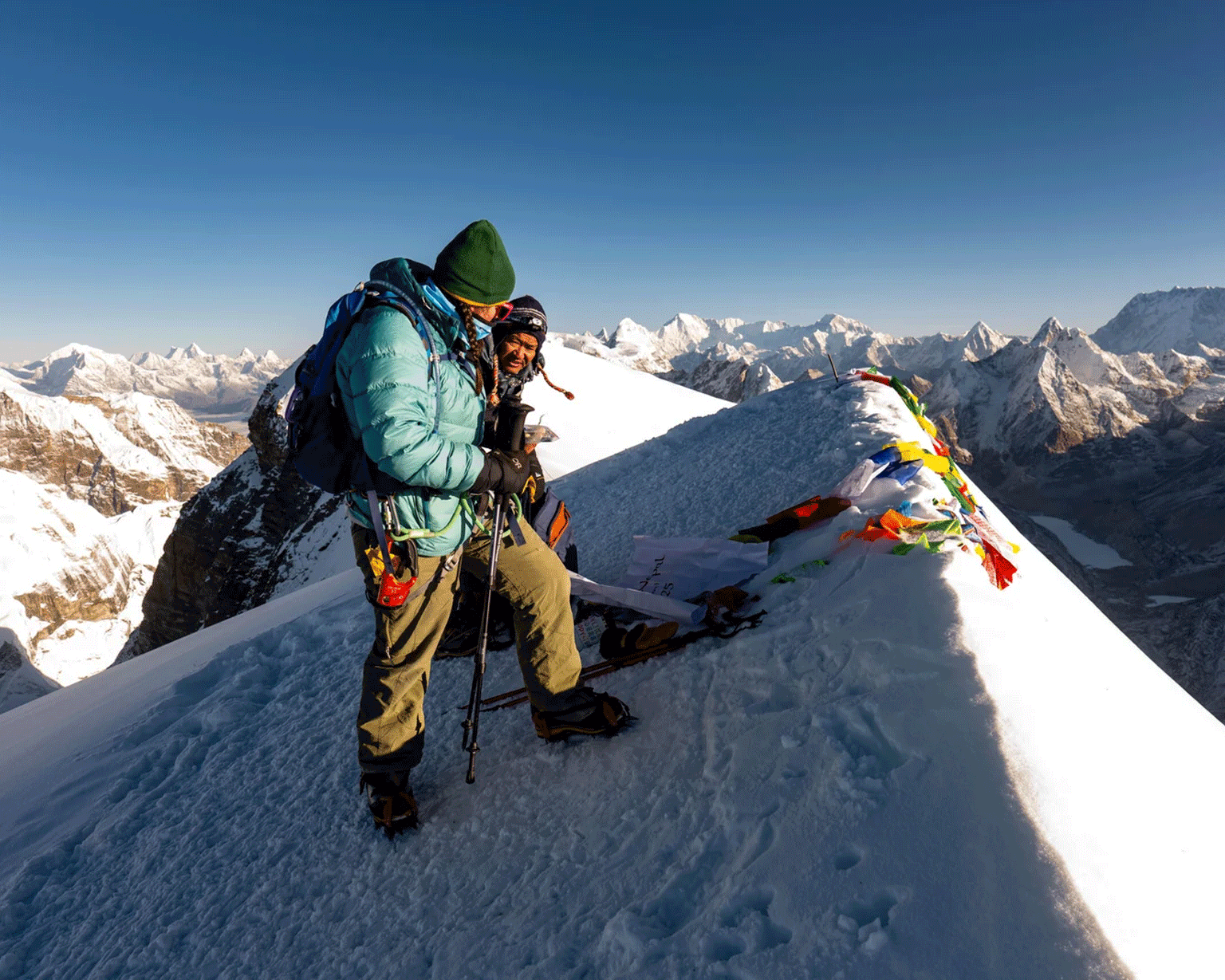
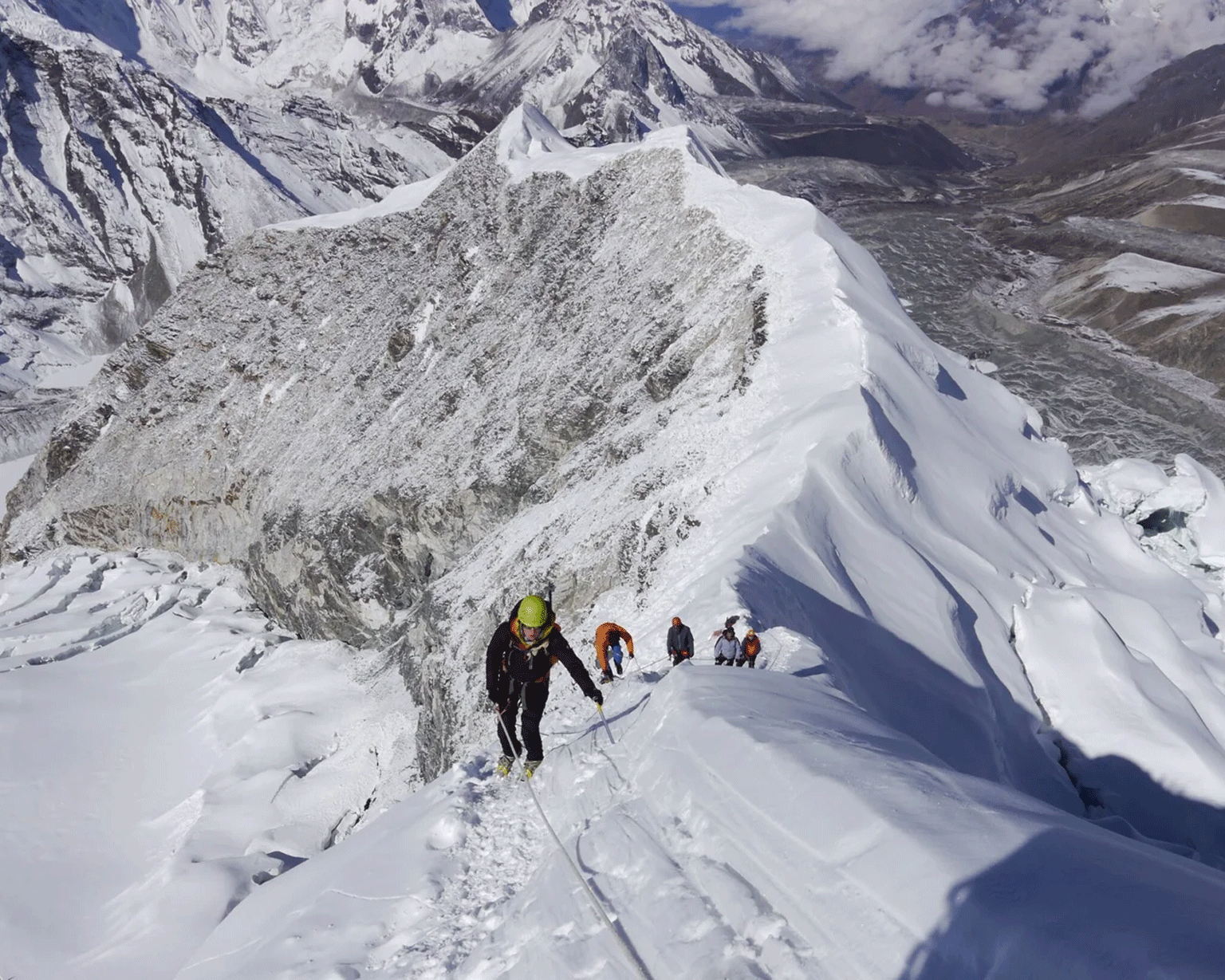
An early pre-dawn start marks summit day. The ascent involves snow and ice climbing with the use of ropes, crampons, and ice axes under the guidance of experienced climbing Sherpa. From the summit, enjoy breathtaking panoramic views of Annapurna, Dhaulagiri, Manaslu, and Tibetan peaks. After celebrating the achievement, descend carefully back to Ngawal for overnight rest.
This day is reserved as a contingency in case of unfavorable weather conditions or to allow flexibility for the summit attempt. If unused, it serves as an additional rest day, enhancing safety and overall expedition success
The trek descends gradually to Humde, passing through traditional Manang villages and open valleys. From Humde, a scenic drive takes you to Besisahar, retracing the route through the Marsyangdi Valley. Overnight stay in Besisahar.
After breakfast, drive back to Kathmandu along the highway, enjoying views of rivers, hills, and rural settlements. Upon arrival, transfer to your hotel. The evening is free to relax, explore the city, or enjoy a farewell dinner celebrating the successful expedition.
According to your flight schedule, you will be transferred to Tribhuvan International Airport for your onward international departure. The expedition concludes with lasting memories of a successful Chulu West Peak climb and the magnificent Annapurna region.
Package details
What's Included
- Airport pick up and drops off.
- Two night in a hotel in Kathmandu with breakfast.
- Three Meals a day, breakfast, lunch, and dinner during the trek.
- Fresh fruit every evening after dinner.
- Room service is available during trekking.
- All necessary peak climbing permits.
- Highly experienced, friendly, English-speaking government.
- Chulu West Peak climbing permit.
- First aid kit available.
- Government taxes and official expenses.
- Domestic flight one way.
What's not Included
- Nepal entry visa fee.
- Personal travel and medical insurance.
- International airfare.
- Personal expenses.
- All alcoholic and non-alcoholic drinks are available during the trek.
- Desserts and sweet items like as chocolate, cake, pie, pudding.
- Hot showers and battery charges.
- Tips for guide, porter, and driver.
Why Choose Chulu West Peak Climbing?
Chulu West sits quietly above the Manang valley, less climbed and more demanding than most Annapurna region peaks. For those who want a genuine high-altitude challenge without the crowds, it is one of Nepal’s most rewarding objectives.
A true high-altitude summit at 6,419m
Panoramic views of the Annapurna massifs
Less climbed than Chulu East
More technical than standard trekking peaks
Integrates with the Annapurna Circuit
Rich Manangi cultural experience
Well-structured acclimatization
Exceptional value for a 6,000m+ expedition
Book Now
Our experienced guides and expedition team are ready to plan your Chulu West Peak adventure. Fill out the form and we’ll get back to you within 24 hours with a tailored proposal.
How Difficult Is Chulu West Peak Climbing?
Moderate to Strenuous
Chulu West is a serious mountain. The approach is long, the altitude is significant, and the upper slopes demand confident glacier and snow technique. It is the right objective for fit, experienced trekkers ready to move into technical climbing territory.
- 6–8 hours of trekking per day across alpine and glaciated terrain
- Glacier travel, fixed rope climbing, and confident crampon use required
- Steeper snow slopes than Chulu East, more demanding on the upper mountain
- Proper acclimatization throughout the Annapurna Circuit approach is essential
- Ice axe technique and basic rope handling skills required
Effort breakdown
Based on our guides’ experience
Best Time for Chulu West Peak Climbing
The Annapurna region has its own distinct weather patterns. Getting the season right on Chulu West is critical, the upper mountain is exposed and conditions can change quickly.
Recommended seasons
Best visibility, stable weather, firm snow conditions on the upper slopes
Clear skies after monsoon, settled weather, October offers near-perfect climbing conditions
Seasons to avoid
Monsoon (June – Aug)
Heavy rain, hazardous glacier approaches, poor visibility
Winter (Dec – Feb)
Extreme cold, deep snow at altitude, high avalanche risk on upper mountain
Who Can Climb Chulu West Peak?
Chulu West is best suited to trekkers who have already spent meaningful time at altitude and are ready for their first real technical climbing challenge. Enthusiasm alone is not enough here.
Requirements
- Good to excellent physical fitness and cardiovascular endurance
- Previous trekking experience above 4,500m strongly recommended
- Everest Base Camp or Annapurna Base Camp trek is ideal preparation
- Basic mountaineering knowledge or willingness to learn on the approach
Training Includes
- Crampon fitting and glacier travel techniques
- Fixed rope and jumar technique
- Steep snow slope movement and rope team coordination
- High-altitude breathing and pacing strategies
Chulu West Peak Climbing FAQs
Everything you need to know before booking your expedition.
The standard Chulu West Peak expedition runs 13 days from Kathmandu and back. This covers the drive to Chame, the Annapurna Circuit approach through Pisang, Ngawal, and Yak Kharka, an acclimatization day at Ngawal, the high camp push to 5,600m, summit day, a reserve day for bad weather, and the return drive to Kathmandu via Humde and Besisahar. Climbers who want extra acclimatization time or wish to complete a longer section of the Annapurna Circuit can extend the itinerary to 15–17 days without significantly altering the climbing plan.
Chulu West is a technically demanding trekking peak and carries more inherent risk than beginner objectives. The primary hazards are altitude sickness, steep glaciated terrain, rapidly changing weather, and crevasse exposure on the upper mountain. These risks are well-managed when climbing with experienced, government-licensed guides who implement strict acclimatization protocols, conduct daily health monitoring, and carry comprehensive emergency equipment. Helicopter rescue insurance is strongly recommended for all climbers, as emergency evacuation from the Manang region, while possible, requires advance planning and adequate insurance coverage.
Prior high-altitude trekking experience is strongly recommended for Chulu West. The peak is more technically demanding than introductory options like Island Peak or Mera Peak, and climbers who arrive without any altitude experience face a significantly higher risk of altitude sickness and failed summit attempts. Ideally, you should have completed a major trek above 4,500m such as the Everest Base Camp trek or Annapurna Base Camp trek before attempting Chulu West. Technical skills including crampon use, ice axe handling, and fixed rope technique will be taught by your guide during the approach, but arriving with some prior exposure to these skills is a genuine advantage.
The summit success rate for Chulu West Peak is approximately 60–70% for well-prepared climbers following a proper acclimatization schedule. It is slightly lower than Chulu East due to the steeper and more technical nature of the upper mountain. Spring consistently delivers the highest success rates, with stable weather windows and firmer snow conditions making the summit push more manageable. The most common reasons for unsuccessful attempts are insufficient acclimatization, poor weather on summit day, and underestimating the physical and technical demands of the climb from high camp at 5,600m to the summit at 6,419m.
Temperatures vary considerably across the altitude range of this expedition. At Ngawal (3,680m) during autumn, daytime temperatures are comfortable at 8°C to 15°C, with nights dropping to around -3°C to -8°C. At Yak Kharka (4,050m), overnight temperatures fall to -8°C to -12°C. At high camp (5,600m), temperatures drop to -15°C to -20°C at night and wind chill on the exposed upper slopes can push perceived temperatures well below -25°C on summit day. The Annapurna region is known for strong afternoon winds that significantly increase the cold factor. A four-season sleeping bag rated to -20°C, high-quality down suit, double-layer mountaineering boots, and insulated overmitts are all essential.
Three permits are required for a Chulu West Peak expedition. First, the Chulu West Peak climbing permit issued by the Nepal Mountaineering Association (NMA). Second, the Annapurna Conservation Area Permit (ACAP), required for all trekkers and climbers passing through the Annapurna Conservation Area. Third, a TIMS card is required for the Annapurna Circuit trekking section. All permit arrangements are typically handled by your trekking agency as part of the expedition package, so no individual permit applications are needed on your part.
Essential technical gear for Chulu West includes mountaineering boots compatible with step-in crampons, crampons, ice axe, climbing harness, helmet, jumar ascender, carabiners, and a belay device. Clothing requirements include a high-quality down suit or equivalent layering system, insulated gloves and overmitts, balaclava, glacier goggles, and high-SPF sunscreen for glacier reflection. A four-season sleeping bag rated to at least -20°C is essential for high camp nights. Most agencies supply shared technical equipment such as fixed ropes and anchors. Personal items including trekking poles, a reliable headlamp with spare batteries, a well-fitted daypack, and a personal hydration system complete the kit list.
The standard route begins with a drive from Kathmandu to Chame, followed by the Annapurna Circuit trek through Pisang and Ngawal. From Ngawal, the route branches toward Yak Kharka and climbs to high camp at approximately 5,600m. The summit push from high camp involves ascending steep snow and glaciated terrain to the summit ridge at 6,419m. The descent follows the same route back to high camp, then down through Ngawal and Humde before the drive back to Besisahar and Kathmandu. The route requires confident crampon technique and fixed rope skills throughout the upper mountain section and should not be attempted without a certified guide.
Yes. Chulu West integrates naturally with the Annapurna Circuit, and many climbers extend their itinerary to include additional sections of this iconic route. Chulu East Peak (6,584m) is the most common combination, though attempting both peaks requires a longer itinerary of 18–20 days and a higher level of fitness and technical ability. Pisang Peak (6,091m) is another nearby option that experienced climbers occasionally combine with Chulu West. Any combination itinerary requires careful acclimatization planning and should be discussed thoroughly with your guide and agency before departure to ensure the schedule is realistic and safe.
Training for Chulu West should begin 3–4 months before departure and prioritize cardiovascular endurance above everything else. Running, cycling, swimming, and weighted stair climbing are all effective ways to build the aerobic base needed for 6–8 hour days at altitude. Leg and core strength training will improve your performance on steep snow slopes and during long descent days. If possible, complete a high-altitude trek above 4,500m in the months before your expedition to experience genuine altitude stress on your body. Practice hiking on uneven terrain with a loaded pack to prepare your joints and balance. On summit day, Chulu West will test your physical limits and your mental resolve in equal measure both need to be trained.
- Good to excellent physical fitness and cardiovascular endurance
- Previous trekking experience above 4,500m strongly recommended
- Everest Base Camp or Annapurna Base Camp trek is ideal preparation
- Basic mountaineering knowledge or willingness to learn on the approach