



Altitude
8,848.86 m

Co-ordinates
27.9881° N, 86.9250° E

Duration
55 Days

Best Season
Spring

Activity
8000m Expedition

Trip Grade
Extremely Difficult
Mount Everest Expedition
Dominating at 8,848.86 metres, Everest stands as the absolute crown of the Himalayas, the apex of the world, visible as a dark, wind-swept pyramid from the first high ridges of the Khumbu. The locals named it with reverence. In Tibetan, it is Chomolungma, “Goddess Mother of the World”, and in Nepali it is Sagarmatha, “Forehead of the Sky”, and it carries the weight of a legend.
The summit is the horizon. Lhotse, Makalu, Cho Oyu, and the infinite curve of the earth all fall away below, more vast and humbling than any other vantage point on the planet.
Getting there follows the historic path through Namche Bazaar and Tengboche before the high-altitude battle begins in earnest, the shifting Khumbu Icefall, the frozen expanse of the Western Cwm, and the oxygen-starved “Death Zone” that demands every ounce of a climber’s soul.
For those chasing the ultimate human limit or simply standing atop the world, Everest remains in a category of its own.
Upon arrival at Tribhuvan International Airport (TIA), complete your Nepal entry visa formalities at the immigration counter. Our Climb in Nepal representative will be waiting for you in the arrivals hall holding a sign with your name. After a warm welcome, you will be transferred to your comfortable hotel in Kathmandu. Rest, freshen up, and relax after your journey.
This day is dedicated to essential expedition preparations and recovery after international travel. While climbers rest and adjust, our team completes all required permit formalities with the relevant authorities. A thorough equipment inspection is conducted to ensure all personal and technical gear meets expedition standards. Final briefings with the expedition leader and Sherpa team are held, allowing time for questions, adjustments, and last-minute arrangements before departing for eastern Nepal.
An early morning scenic flight takes you to Lukla, offering spectacular aerial views of the Himalayan range. Upon landing at the renowned mountain airstrip, the trek officially begins. The trail follows the Dudh Koshi River through charming Sherpa villages and forested paths to Phakding. This short and gentle walk allows for gradual acclimatization while easing into the rhythm of trekking in the Khumbu region.
Today’s trek follows the Dudh Koshi River through pine forests and traditional Sherpa villages, crossing several iconic suspension bridges draped with prayer flags. After entering Sagarmatha National Park, the trail climbs steadily toward Namche Bazaar. As the ascent unfolds, weather permitting, the first views of Mount Everest appear along the trail. Namche Bazaar, the vibrant heart of the Khumbu region, offers a comfortable overnight stay and an ideal setting for acclimatization.
This day is dedicated to proper acclimatization, a critical element for a safe and successful ascent. Guided acclimatization hikes to nearby viewpoints, such as Everest View Hotel or Khumjung village, help the body adjust to altitude while offering spectacular mountain scenery. The remainder of the day is reserved for rest, hydration, and exploration of Namche Bazaar, including its local markets, bakeries, and cultural sites.
The trail continues through beautiful rhododendron and pine forests with outstanding views of Ama Dablam, Everest, and Lhotse. A highlight of the day is the visit to the renowned Tengboche Monastery, the spiritual heart of the Khumbu region, where climbers can experience the serene atmosphere and Himalayan Buddhist culture. Afterward, the trail descends slightly to Deboche, a quiet alpine settlement surrounded by forested hills, where the team rests overnight.
Today’s trek ascends gradually above the tree line, revealing wide alpine valleys and dramatic mountain landscapes. Passing through the traditional village of Pangboche, the trail follows the Imja Khola River toward Dingboche. Surrounded by stone-walled fields and towering peaks, Dingboche is an important acclimatization stop, offering impressive views of Ama Dablam and the surrounding Himalayan giants.
A crucial acclimatization day to allow the body to adjust to the increasing altitude. The day includes optional guided hikes to nearby ridges such as Nangkartshang Peak, providing panoramic views of Lhotse, Makalu, and Ama Dablam. The remainder of the day is dedicated to rest, proper hydration, and health monitoring, ensuring optimal preparation for the higher elevations ahead.
The trek continues into higher alpine terrain as the landscape becomes increasingly rugged and glaciated. The route passes the Thukla memorials, dedicated to climbers who lost their lives on Everest, offering a moment of reflection. From here, the trail follows the edge of the Khumbu Glacier toward Lobuche. At this altitude, the air is noticeably thinner, and the surroundings take on a stark yet powerful Himalayan character.
A defining day of the expedition. The trek follows the Khumbu Glacier through a dramatic high-altitude landscape of ice formations and towering peaks. As the trail unfolds, the scale and power of the Himalayas become ever more apparent. Upon reaching Everest Base Camp, the team settles into the expedition camp, surrounded by legendary mountains and active glaciers. This iconic location serves as the operational heart of the climb and marks the transition from trekking to the climbing phase of the expedition.
This day is dedicated to rest, organization, and team coordination at Everest Base Camp. Climbers are formally introduced to the full expedition team, including lead guides and high-altitude Sherpa climbers. A traditional Sherpa Puja ceremony is performed to seek blessings from the mountain deities for a safe and successful ascent. This meaningful ritual is an essential part of Himalayan climbing culture and marks the official beginning of the climbing phase of the expedition.
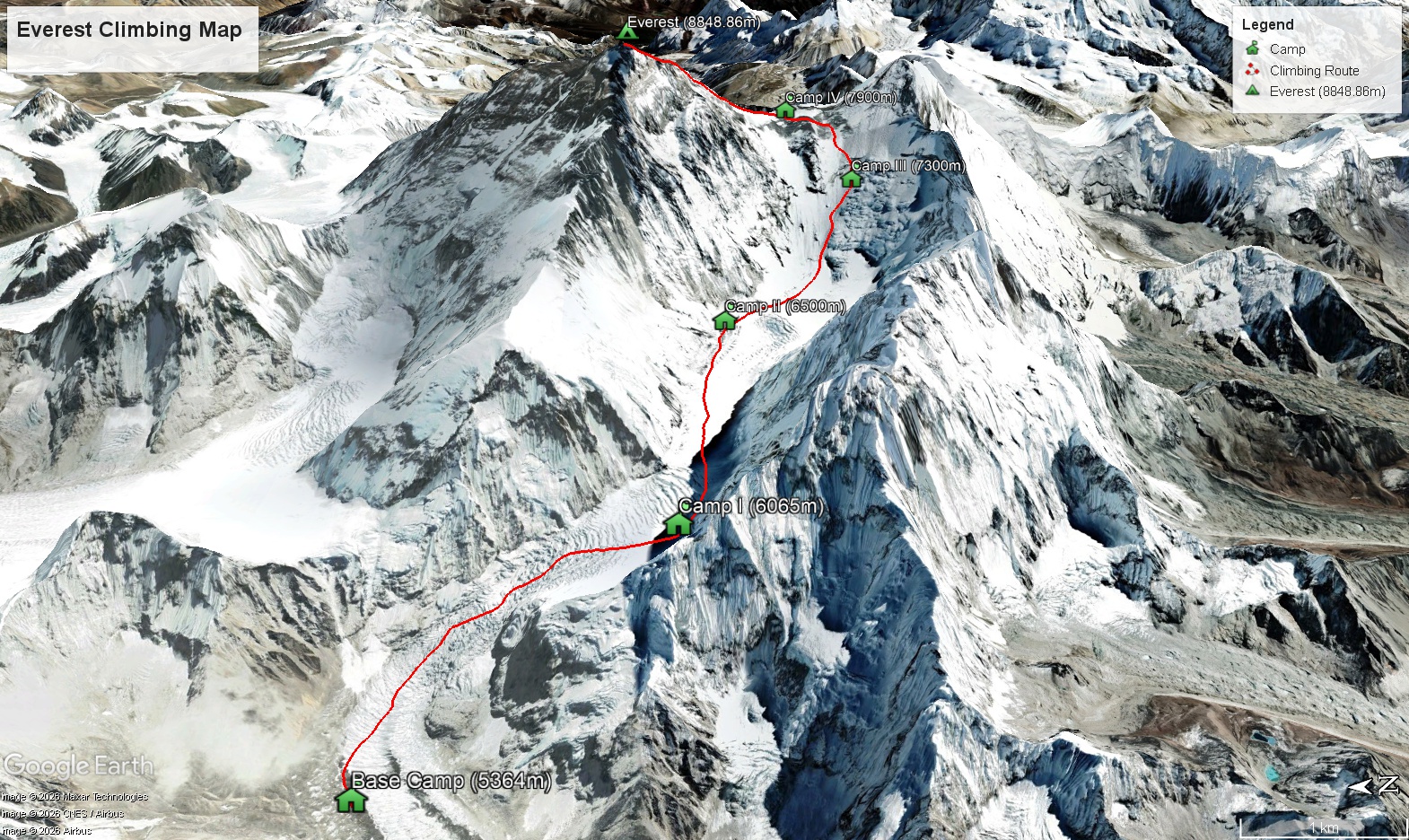
This period is dedicated to the complete Mount Everest climbing program. Activities include carefully planned acclimatization rotations through the Khumbu Icefall and the Western Cwm, establishing and utilizing Camps I, II, III, and IV, and conducting technical training and load carries. Rest days at Base Camp are integrated between rotations to ensure proper recovery. Weather conditions are closely monitored to determine the optimal summit window. The final summit push is undertaken only when conditions are favorable, prioritizing safety, team strength, and summit success.
Following the completion of the climbing phase, the expedition focuses on dismantling Everest Base Camp. All equipment, waste, and temporary structures are carefully packed and removed in accordance with environmental and regulatory guidelines. This clean-up operation reflects our commitment to responsible mountaineering and preserving the fragile Himalayan environment for future generations.
The descent from Everest Base Camp begins today, following familiar trails alongside the Khumbu Glacier. As altitude decreases, breathing becomes easier and the pace more relaxed. The walk to Pheriche allows time for recovery and reflection on the expedition while enjoying the changing landscapes and improved comfort at lower elevation.
Continuing the descent through the Khumbu Valley, the trail leads back to Namche Bazaar. With increased oxygen levels and warmer temperatures, the journey becomes more comfortable and relaxed. Upon arrival, enjoy the welcoming atmosphere of this vibrant mountain town, comfortable lodges, and well-earned rest after the demanding weeks at high altitude.
The final day of trekking follows the Dudh Koshi River through familiar Sherpa villages and forested trails. The descent to Lukla marks the completion of the Himalayan trekking portion of the expedition. In the evening, the team gathers to celebrate the successful journey with the trekking and climbing crew, reflecting on the achievements and experiences of the expedition.
An early morning flight from Lukla returns you to Kathmandu, offering final aerial views of the Himalayan landscape. Upon arrival, you will be transferred to your hotel. The remainder of the day is free to rest, enjoy leisure activities, or explore the cultural and culinary highlights of the city.
This day is reserved as a contingency to accommodate any potential weather-related delays, particularly from mountain flights. When not required for logistics, it offers valuable time to rest and recover after the expedition. Guests may choose to enjoy spa treatments, cultural sightseeing, souvenir shopping, or a relaxed farewell gathering with the expedition team in Kathmandu.
According to your flight schedule, you will be transferred to Tribhuvan International Airport for your onward international journey. The expedition concludes with unforgettable memories of the Himalayas, marking the successful completion of an extraordinary Mount Everest adventure.
Package details
What's Included
- Airport transfers in Kathmandu.
- 4 nights deluxe hotel in Kathmandu (BB basis).
- Welcome & farewell dinners.
- Kathmandu–Lukla round-trip flights (incl. taxes).
- All ground transportation.
- Everest permits (Climbing, Icefall, National Park, TIMS).
- Full board meals during trek & Base Camp.
- Porters & full staff support (wages, gear, insurance).
- Medical & emergency insurance for staff.
- Supplemental oxygen (5–7 bottles per climber).
- Oxygen mask & regulator.
- Dedicated high-altitude Sherpa support.
What's not Included
- International airfare to/from Kathmandu.
- Nepal visa fees.
- Extra hotel nights beyond itinerary.
- Personal travel & medical insurance (incl. evacuation).
- Tips & summit bonuses for expedition staff.
- Personal climbing gear & equipment.
- Emergency evacuation & personal expenses.
- Drinks, laundry, internet & personal spending.
- Personal medications & medical supplies.
- Excess baggage & non-itinerary helicopter flights.
- Any services not mentioned in “Price Includes.”
Book Now
Our experienced guides and expedition team are ready to plan your Mount Everest adventure. Fill out the form and we’ll get back to you within 24 hours with a tailored proposal.