


Altitude
8463 m

Co-ordinates
27.8897° N, 87.0883° E

Duration
47 Days

Best Season
Spring

Activity
8000m Expedition

Trip Grade
Extremely Difficult
Mount Makalu Expedition
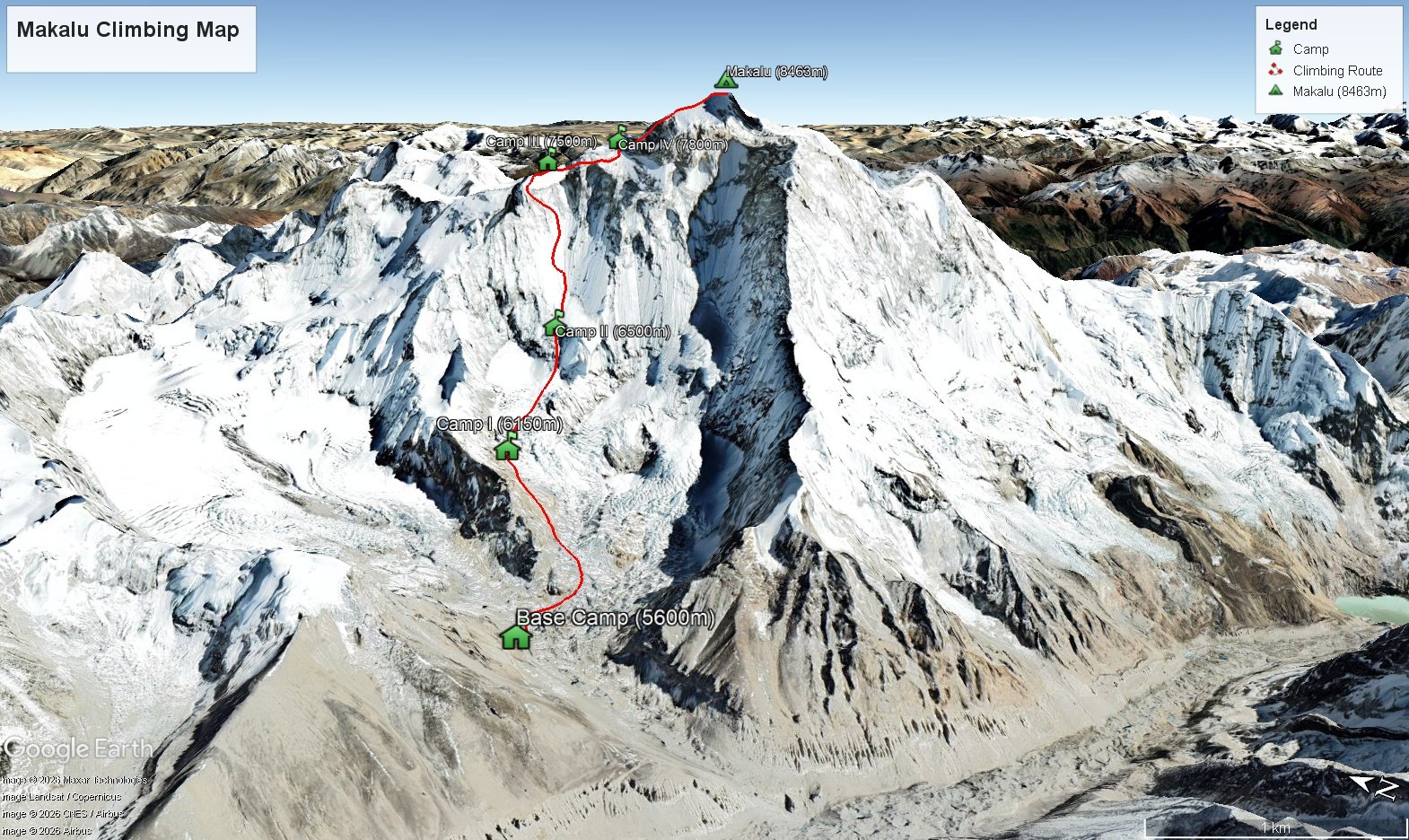
Mount Makalu, the world’s fifth-highest peak at 8,463 meters, rises on the Nepal-China border near Everest. Named “Great Black One” after a fierce form of Shiva, this sacred pyramid-shaped mountain is revered locally and demands serious technical skill. First summited in 1955 by Lionel Terray and Jean Couzy, it remains one of the toughest 8,000ers. Our expeditions run 6–8 weeks, tackling steep glaciers and exposed ridges through remote wilderness. We provide experienced Sherpa guides, permits, camps, oxygen, and strong safety support for this wild and rewarding climb.
Your Himalayan journey begins upon arrival in Kathmandu, Nepal’s vibrant capital. After clearing customs, you are warmly welcomed by our expedition staff and transferred to a carefully selected hotel. The remainder of the day is at leisure ideal for rest after international travel or a gentle introduction to the city’s cultural atmosphere. In the evening, a short welcome meeting provides an overview of the expedition and introduces key team members.
This full day is dedicated to meticulous expedition preparation. Under the guidance of our senior climbing leaders, all personal and group equipment is thoroughly checked and adjusted. Final briefings cover safety protocols, climbing strategy, communication procedures, and emergency planning. Any last-minute gear purchases or rentals can be arranged. This structured preparation ensures every climber is fully ready for the demanding journey ahead.
A scenic flight carries you eastward across Nepal, revealing a dramatic aerial panorama of rolling hills, river valleys, and distant Himalayan peaks. Upon landing in Tumlingtar, you experience a noticeable shift in pace as the expedition transitions from urban comfort to rural Nepal. The afternoon is relaxed, allowing time to settle in and enjoy the subtropical surroundings.
Today’s overland journey follows winding mountain roads through terraced farmland, dense forests, and traditional villages. The drive offers insight into the daily life of eastern Nepal’s rural communities. Reaching Num, perched above the Arun River, marks the gateway to the Makalu-Barun region and the official starting point of the trek.
The trek begins with a steep descent to the Arun River, followed by a steady climb through cultivated hillsides and forested trails. Suspension bridges span deep gorges, while the path passes through small settlements and farmlands. Entering Makalu-Barun National Park, you arrive in Seduwa, a welcoming village surrounded by lush greenery.
Ascending gradually, the trail winds through rhododendron forests, bamboo groves, and cascading streams. The air cools as altitude increases. Tashigaon, a traditional Sherpa village, sits beneath towering ridges and serves as the final permanent settlement before entering higher alpine terrain.
A challenging and rewarding ascent today as the trail climbs steeply above the tree line. The environment becomes increasingly rugged, with expansive views of ridgelines and distant peaks. This demanding day is essential for early acclimatization and prepares the body for the higher passes ahead.
Crossing the Khongma La region, the trek offers breathtaking views before descending dramatically into the Barun Valley. The landscape transforms into dense, moss-covered forests rich with waterfalls and wildlife. Mumbuk provides a peaceful resting point amid lush surroundings.
Following the Barun River upstream, the trail opens into a vast glacial valley flanked by sheer rock walls and tumbling waterfalls. Gradual elevation gain leads to Yangle Kharka, a high alpine pasture where yaks graze beneath towering Himalayan cliffs.
A relatively short trekking day allows the body to adapt to altitude. The route passes through open alpine terrain with growing views of snow-covered peaks. Yak Kharka offers an ideal environment for rest, hydration, and continued acclimatization.
One of the most spectacular days of the approach trek. The trail gradually ascends through stark glacial landscapes as Mount Makalu comes fully into view. Arrival at Makalu Base Camp places you directly beneath the world’s fifth-highest mountain an awe-inspiring and humbling experience.
A crucial acclimatization day. Short hikes around Base Camp help stimulate altitude adaptation while guides monitor health and readiness. Time is also spent organizing equipment, establishing camp routines, and reviewing climbing plans in preparation for higher camps.
Today you move higher onto the glacier, establishing Advanced Base Camp closer to the climbing route. This strategic relocation improves acclimatization and streamlines logistics for the climbing phase. The stark ice-and-rock environment signals the transition from trekking to true high-altitude mountaineering.
This extended period is dedicated to the full Makalu climbing program. Activities include route fixing, acclimatization rotations to higher camps, load carries, rest days, and continuous weather analysis. The summit attempt is carefully timed during the optimal weather window, with safety and success as top priorities. Flexibility during this phase is essential due to mountain and weather conditions.
After the completion of the climb, the descent begins. Returning to lower elevations brings renewed energy and comfort. The journey back through the Barun Valley offers time to reflect on the magnitude of the achievement.
Continuing downhill, the trail passes through alpine meadows and forested sections. Familiar landscapes feel renewed as the body recovers from prolonged high-altitude exposure.
Descending into warmer terrain, you re-enter cultivated lands and traditional villages. Tashigaon welcomes you back with a relaxed atmosphere and cultural familiarity.
The final trekking day retraces the route to Num. Suspension bridges, forest trails, and river crossings mark the closing chapter of the overland journey.
A scenic drive returns you to Tumlingtar, signaling the end of the remote expedition phase. Time is reserved for rest and celebration with the expedition team.
A morning flight brings you back to Kathmandu. Upon arrival, you transfer to your hotel and enjoy the comforts of the city marking a smooth transition from wilderness to civilization and the conclusion of an extraordinary Himalayan expedition.
Package details
What's Included
- Airport transfers in Kathmandu.
- 4 nights deluxe hotel in Kathmandu (BB basis).
- Welcome & farewell dinners.
- Kathmandu–Lukla round-trip flights (incl. taxes).
- All ground transportation.
- Everest permits (Climbing, Icefall, National Park, TIMS).
- Full board meals during trek & Base Camp.
- Porters & full staff support (wages, gear, insurance).
- Medical & emergency insurance for staff.
- Supplemental oxygen (5–7 bottles per climber).
- Oxygen mask & regulator.
- Dedicated high-altitude Sherpa support.
What's not Included
- International airfare to/from Kathmandu.
- Nepal visa fees.
- Extra hotel nights beyond itinerary.
- Personal travel & medical insurance (incl. evacuation).
- Tips & summit bonuses for expedition staff.
- Personal climbing gear & equipment.
- Emergency evacuation & personal expenses.
- Drinks, laundry, internet & personal spending.
- Personal medications & medical supplies.
- Excess baggage & non-itinerary helicopter flights.
- Any services not mentioned in “Price Includes.”
Book Now
Our experienced guides and expedition team are ready to plan your Mount Makalu adventure. Fill out the form and we’ll get back to you within 24 hours with a tailored proposal.