Altitude
5840m

Co-ordinates
28°10′06″N, 85°32′56″E

Duration
17 Days

Best Season
Spring and Autumn

Activity
Peak Climbing

Trip Grade
Moderate to Difficult
Ganja La Chuli (Naya Khang Peak)
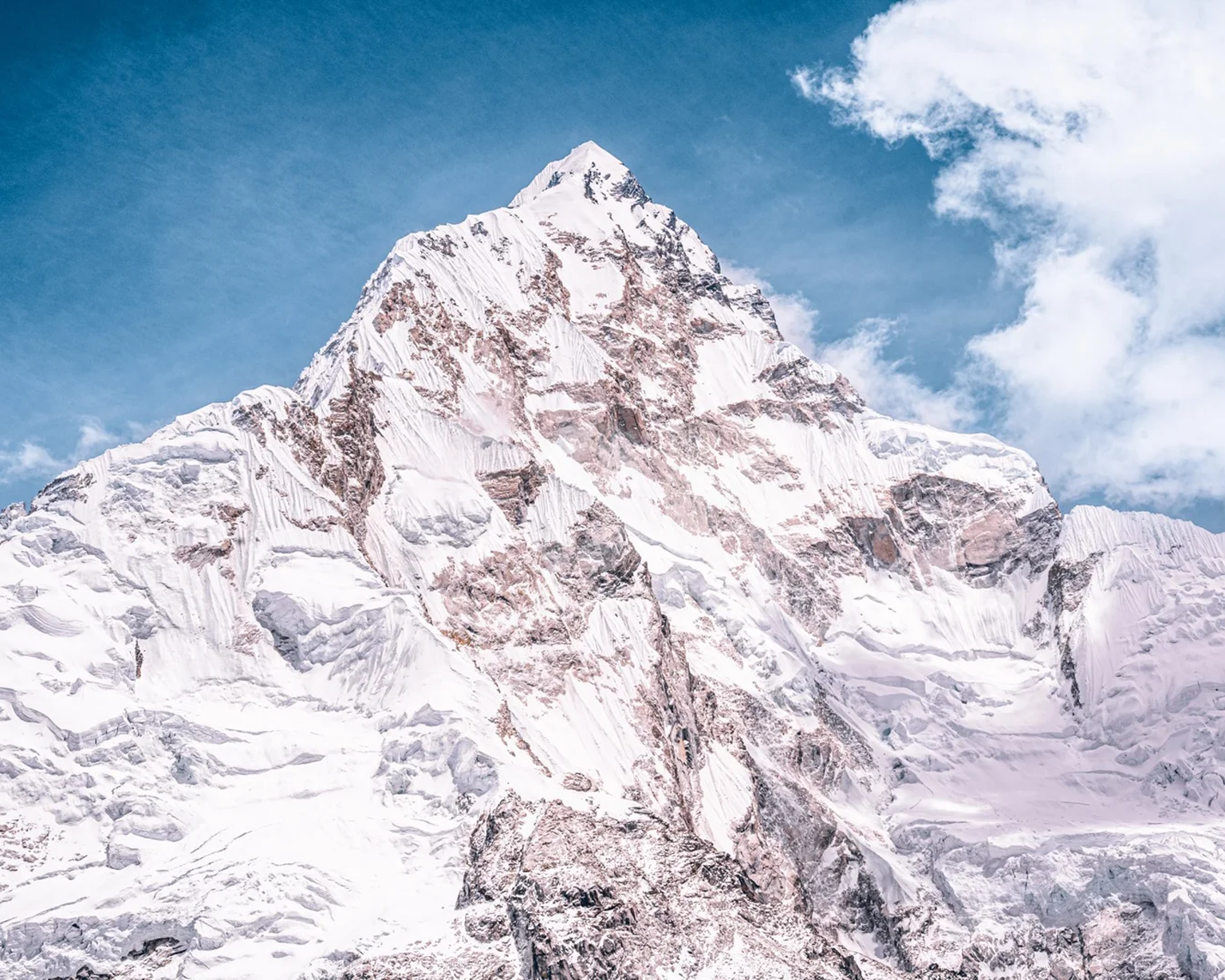
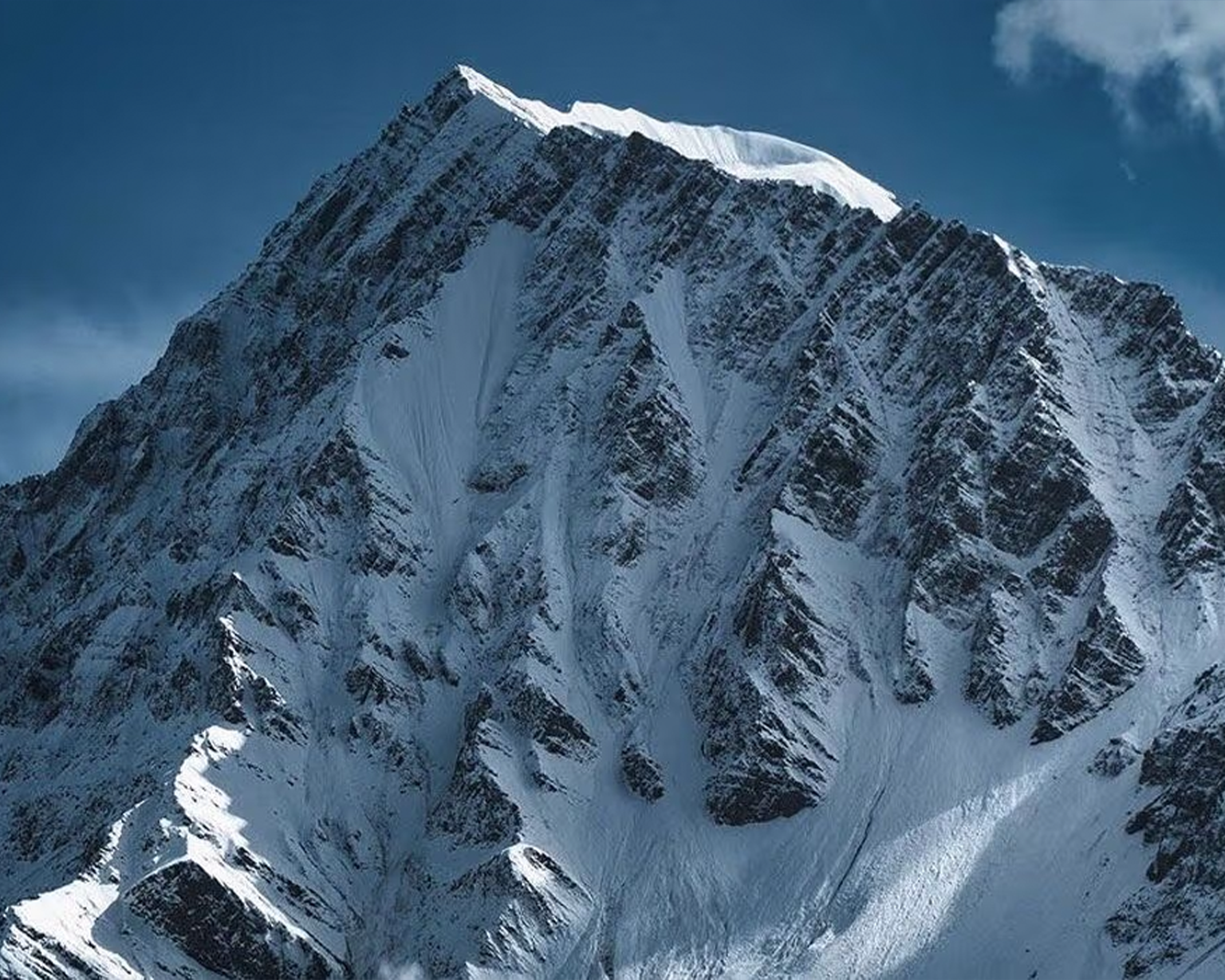
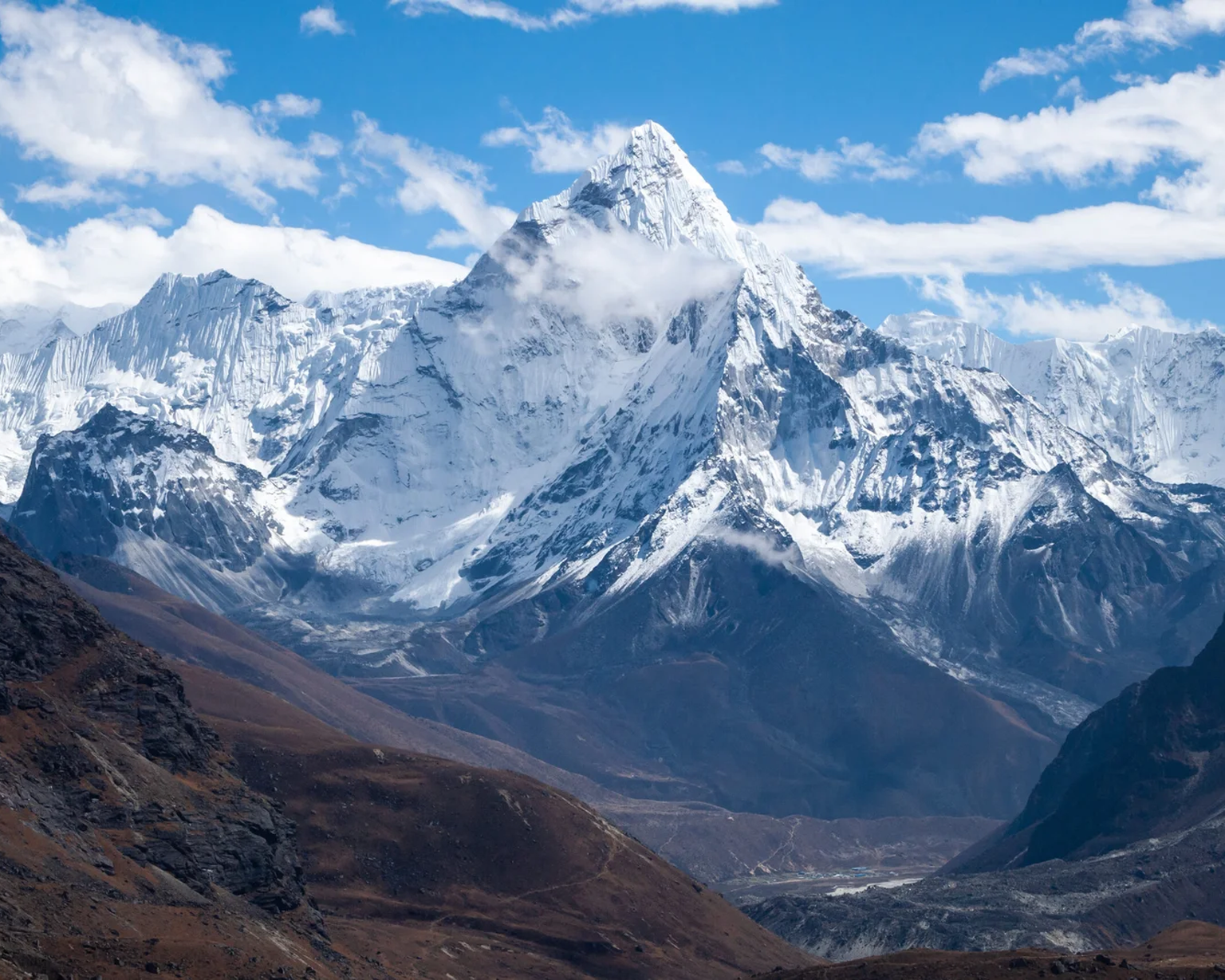
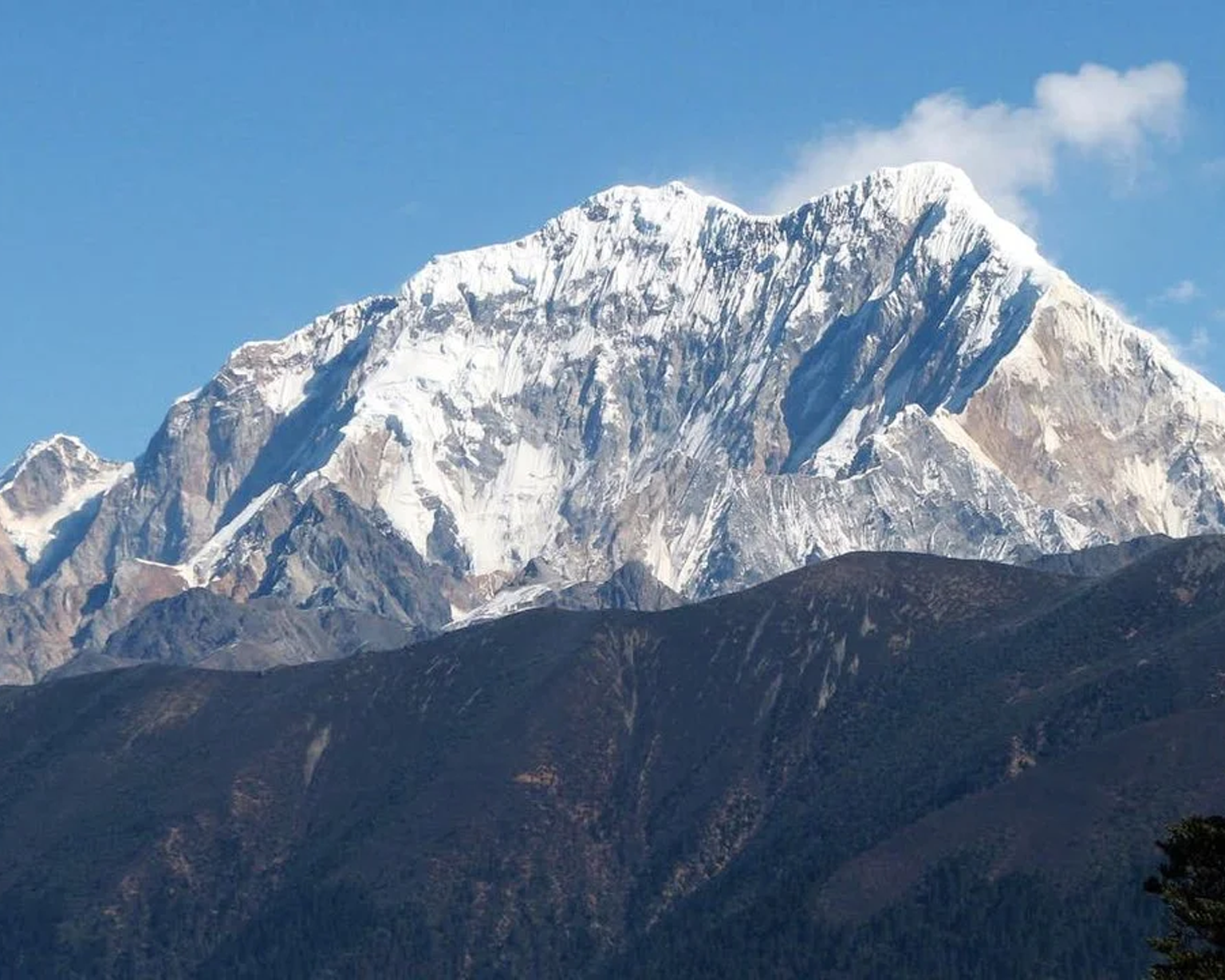
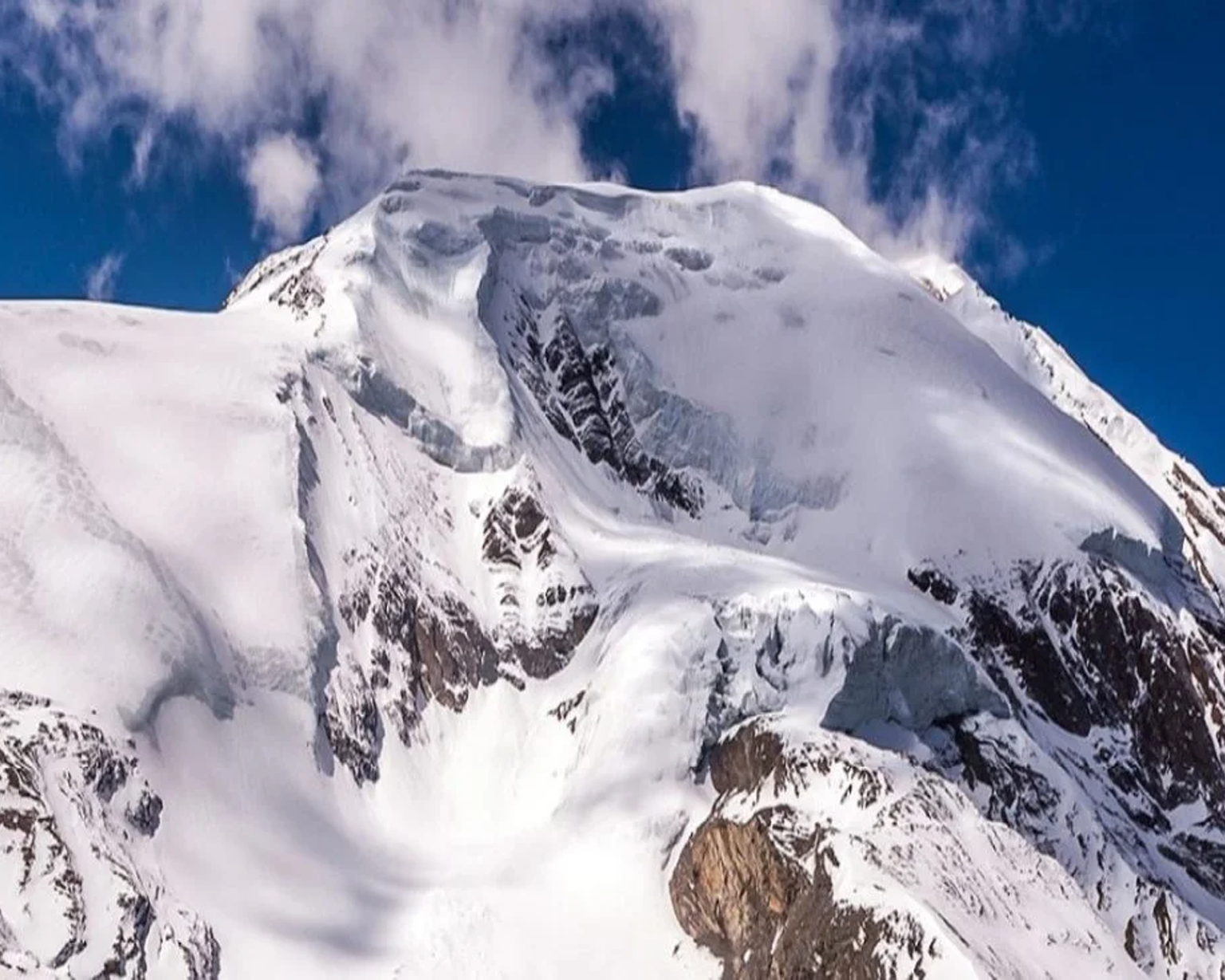
Ganja La Chuli (5,840m) is also called Naya Khang Peak. It sits in Nepal’s Langtang region, west of Ganja La Pass (5,122m), near the Tibetan border.
The route crosses Tamang villages, alpine meadows, and rocky ridges. Snow starts closer to the top. Unlike Everest or Annapurna, this trail sees few climbers; it still feels raw and untouched.
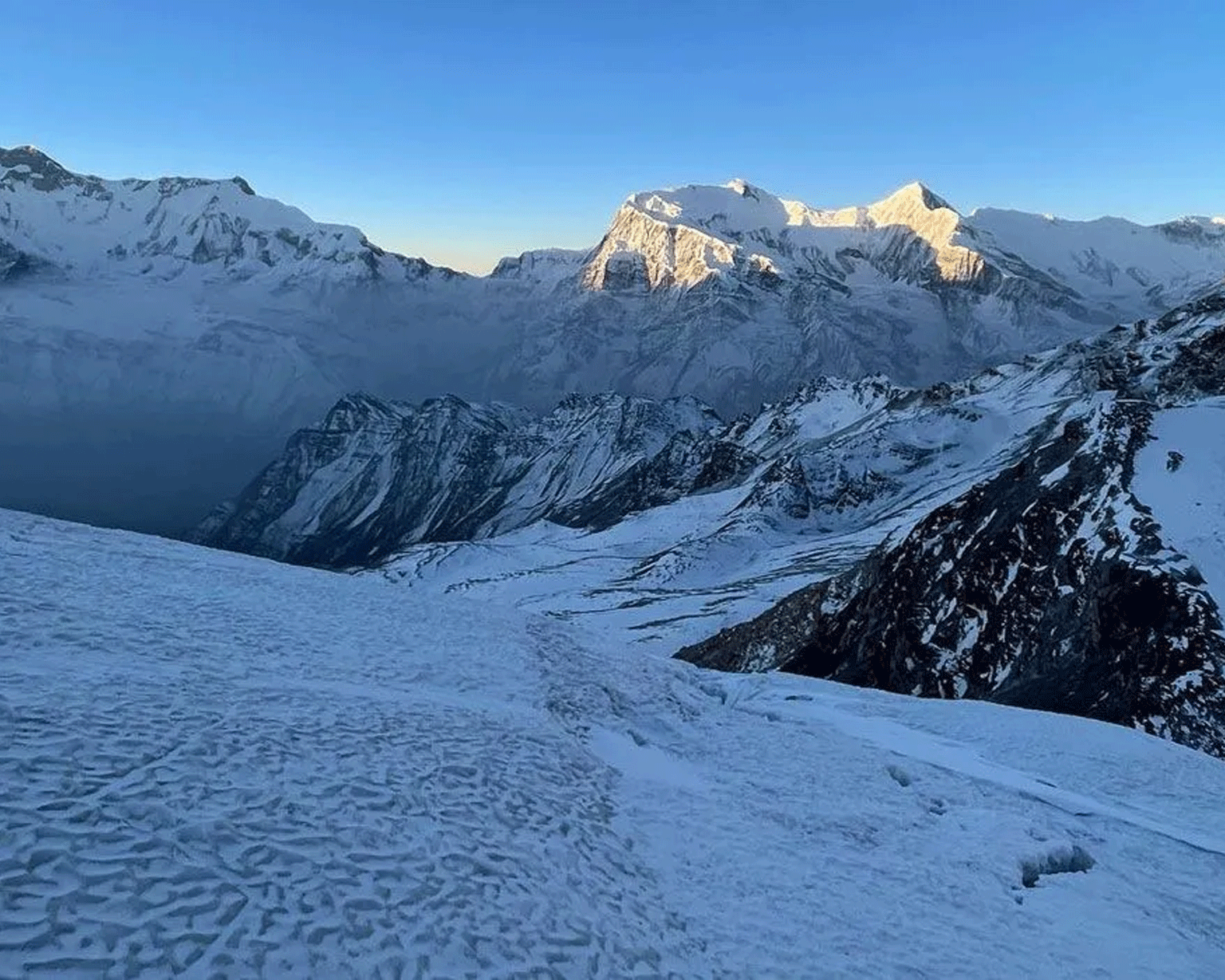
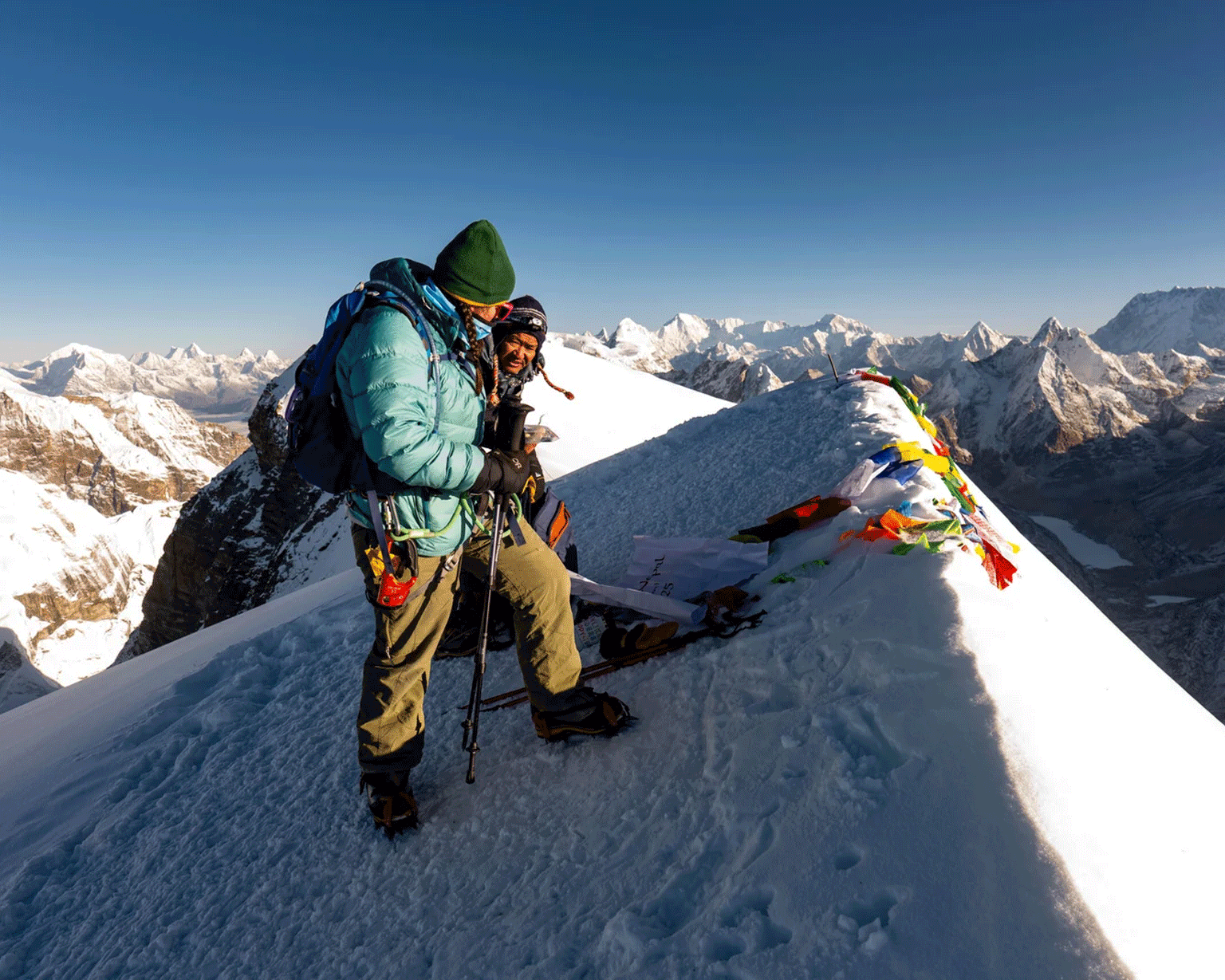
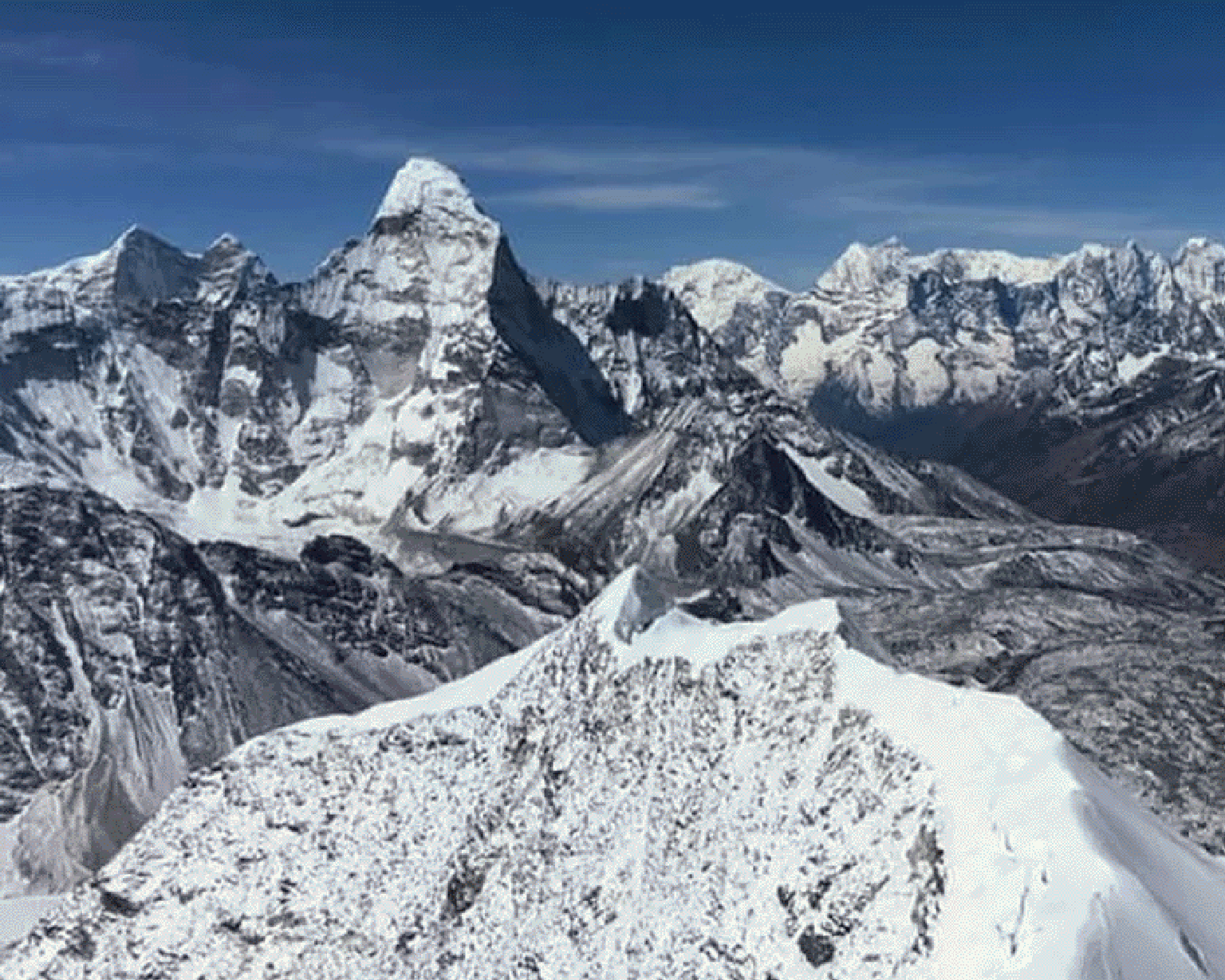
Langtang Lirung, Dorje Lakpa, and the Tibetan plateau are all visible from the summit.
No prior climbing experience is needed. Just show up fit and acclimatised, the mountain does the rest.
Upon arrival at Tribhuvan International Airport (TIA), complete your Nepal entry visa formalities at immigration. Our representative will warmly welcome you at the arrivals hall and transfer you to your hotel in Kathmandu. After check-in, take time to rest and recover from your journey, preparing for the adventure ahead.
This day is dedicated to expedition preparation and recovery. Our team completes permit formalities while climbers undergo a full equipment check to ensure all personal and technical gear meets safety standards. A detailed briefing is conducted covering the trekking route, climbing objectives, safety protocols, and weather conditions. Final adjustments and last-minute shopping can be done as needed.
A scenic drive takes you north from Kathmandu through winding mountain roads, terraced hillsides, and traditional villages. Passing along rivers and deep valleys, the journey offers a glimpse of rural Nepal. Upon arrival in Syabrubesi, the gateway to Langtang Valley, settle into your lodge and rest overnight.
The trek begins along the Langtang Khola, passing through lush forests of oak, bamboo, and rhododendron. The trail ascends gradually, crossing suspension bridges and small settlements along the way. Wildlife such as monkeys and colorful birdlife may be spotted. Overnight at Lama Hotel, nestled within the forested valley.
The trail climbs steadily as the landscape opens into wide alpine terrain. Passing through Ghodatabela, the route continues alongside the river with impressive views of Langtang Lirung. Arriving at Langtang Village, you’ll experience the unique culture of the Tamang people and observe the rebuilding efforts following the 2015 earthquake.
A shorter and scenic trek leads to Kyanjin Gompa, the spiritual and cultural center of the Langtang region. Surrounded by towering peaks and glaciers, the area offers stunning mountain views. After arrival, explore the monastery, local cheese factory, and enjoy the dramatic Himalayan setting.
A vital acclimatization day to allow the body to adjust to altitude. Optional hikes to nearby viewpoints such as Kyanjin Ri or Tserko Ri provide spectacular panoramic views of Langtang Himal, Dorje Lakpa, and surrounding glaciers. The remainder of the day is spent resting, hydrating, and preparing for higher elevations.
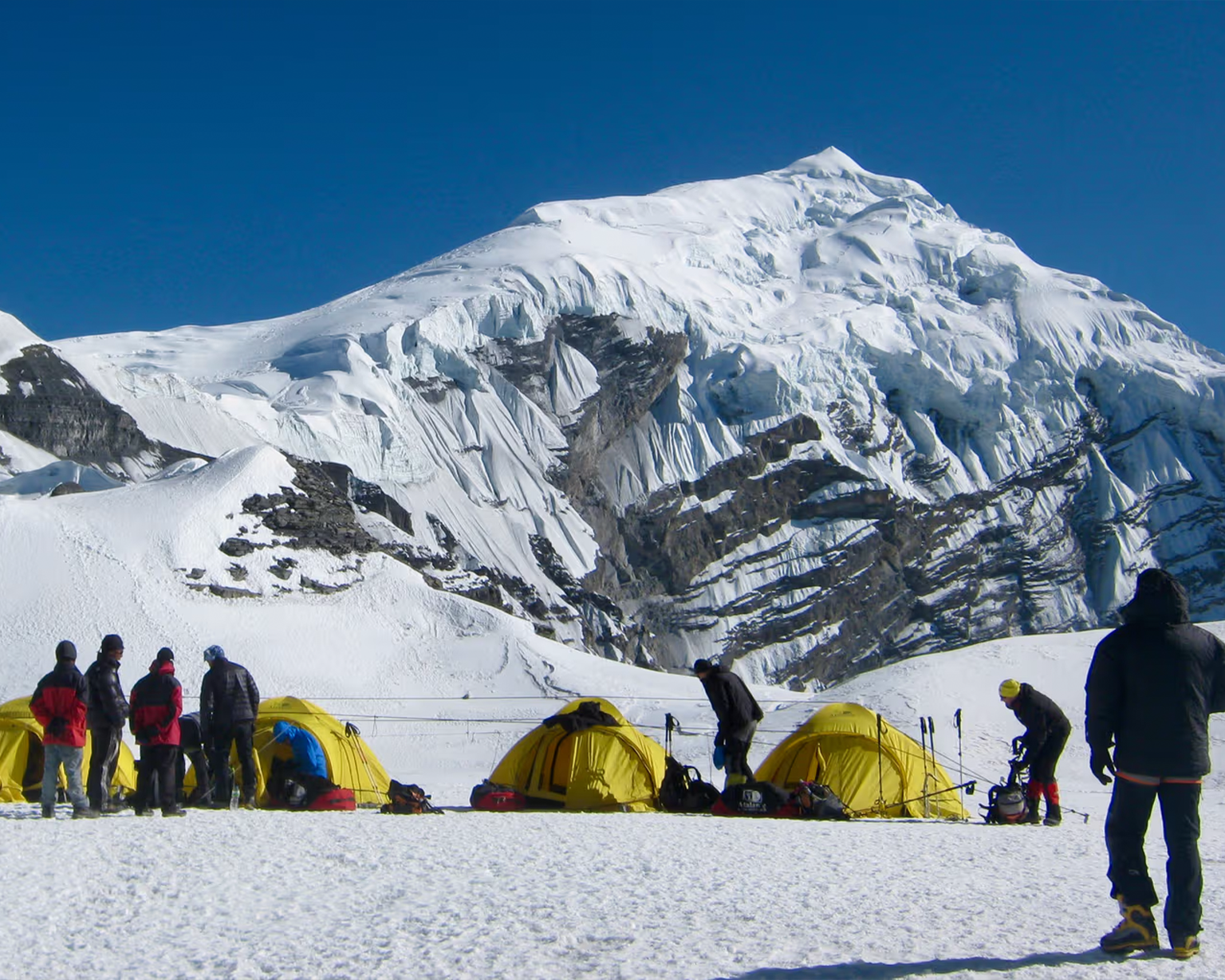
Leaving the main Langtang trail, the route ascends into more remote and rugged terrain. The landscape becomes increasingly alpine and glaciated as you approach Ganja La Base Camp. This isolated campsite offers a true expedition atmosphere and serves as the staging point for the peak climb and pass crossing.
This day is reserved for rest, acclimatization, and technical preparation. Climbers receive training on rope techniques, crampon use, and safety procedures. The team carefully monitors weather conditions and finalizes plans for the summit attempt of Ganja La Chuli Peak.
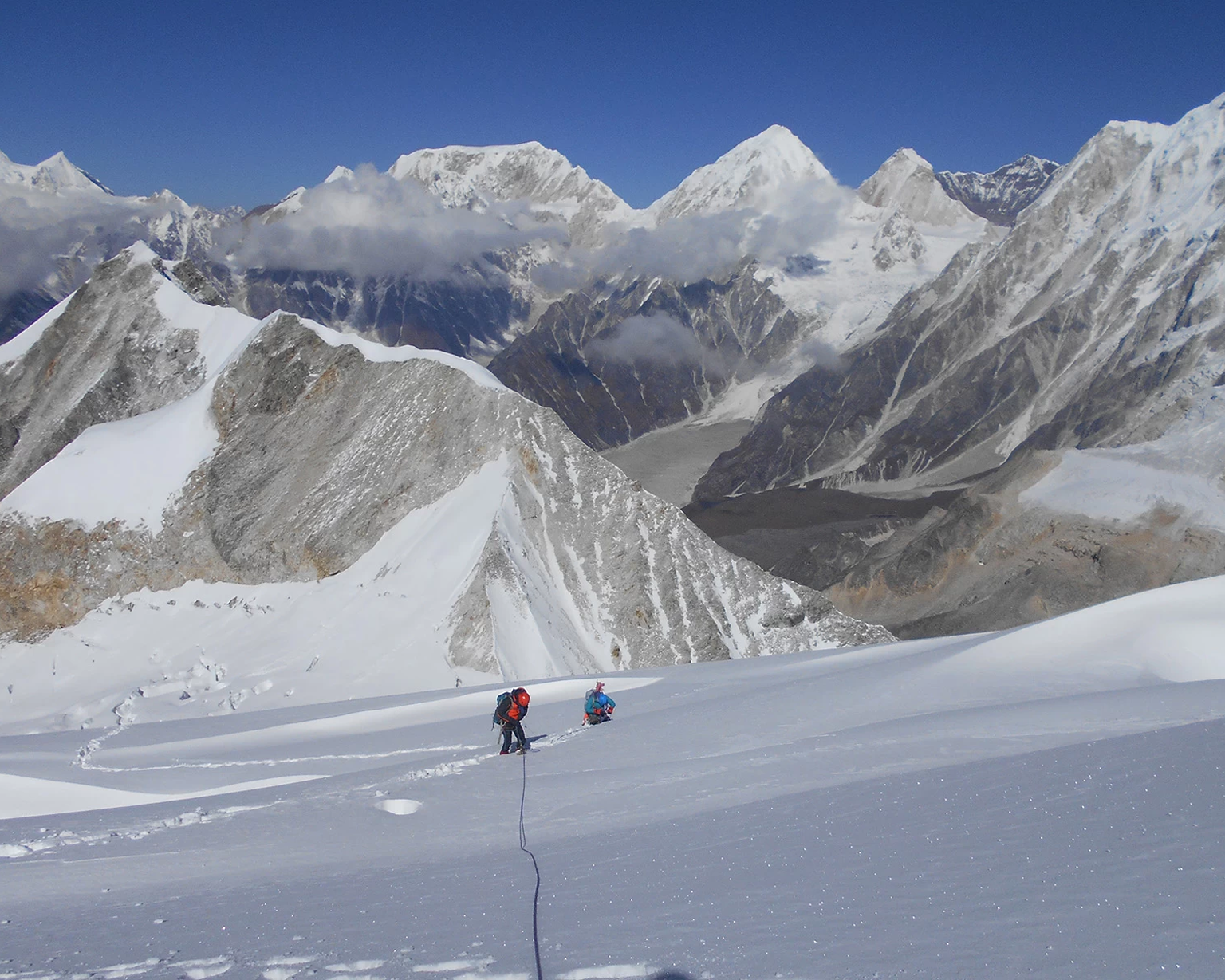
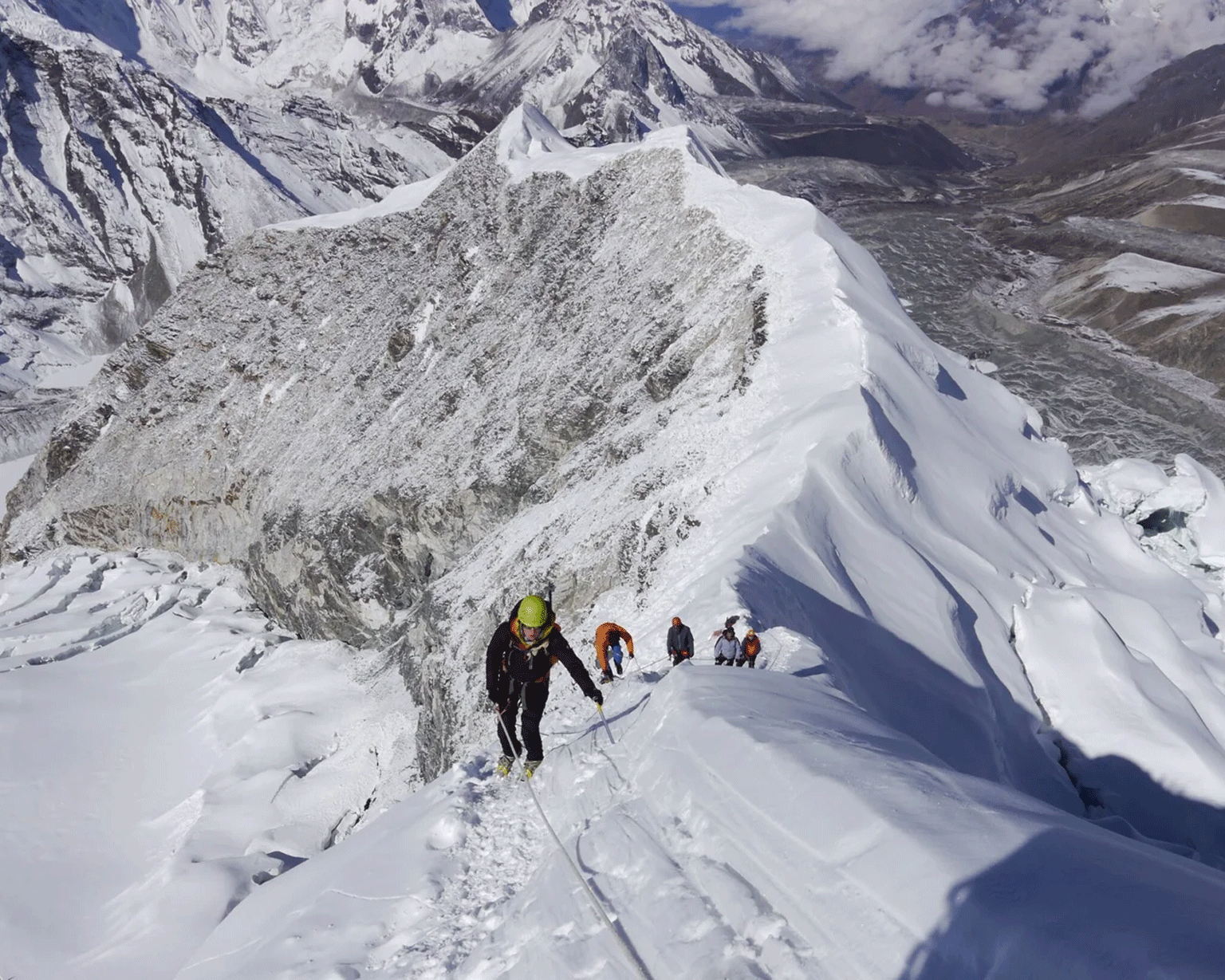
An early alpine start marks the most challenging and rewarding day of the expedition. The ascent involves snow and ice climbing, requiring careful movement and teamwork. Upon reaching the summit, climbers are rewarded with breathtaking views of Langtang, Ganesh Himal, and the Tibetan plateau. After celebrating the achievement, descend carefully back to Base Camp.
Crossing the formidable Ganja La Pass is a demanding but spectacular journey. The route involves snow-covered terrain and steep sections, requiring technical skills and coordination. After reaching the pass, the descent leads into the remote Helambu region, arriving at Keldang for overnight rest.
The trail descends gradually through high alpine landscapes into greener valleys. Passing through remote yak pastures and seasonal settlements, the trek offers solitude and pristine mountain scenery. Overnight at Dukpu, a quiet village reflecting traditional mountain life.
Continuing through the Helambu region, the trail passes forests, stone houses, and cultivated terraces. Tarke Gyang, one of the largest Sherpa villages in Helambu, is rich in culture and history, featuring ancient monasteries and traditional architecture.
A pleasant and scenic walk through forests and rolling hills leads to Sermathang. The trail offers beautiful views of the surrounding valleys and distant peaks. Sermathang is known for its warm hospitality and cultural charm, providing a comfortable overnight stay.
A scenic drive brings you back to Kathmandu, transitioning from mountain landscapes to urban life. Upon arrival, transfer to your hotel and enjoy a well-earned rest. The evening is free for shopping, sightseeing, or a farewell dinner.
A well-earned rest day in Kathmandu. Guests may explore cultural heritage sites, enjoy souvenir shopping, relax at cafés, or treat themselves to spa and wellness services. This day also serves as a buffer for any potential flight delays.
According to your flight schedule, you will be transferred to Tribhuvan International Airport for your onward journey. The expedition concludes with unforgettable memories of the Langtang region, Ganja La Chuli summit, and the remarkable Helambu traverse.
Package details
What's Included
- Airport pick up and drops off.
- First visit two night and second visit two night hotel in Kathmandu.
- By public jeep and bus.
- Three meals daily.
- National park entry fees.
- Permit for related peak.
- High food and utensils up to basecamp.
- Team equipment.
- Two persons sharing a base tent up to base, single in base.
- Summit bonus for guides and assistants.
- Tips guide, assistants, crews staff.
- Summit party expenses.
- So on
What's not Included
- Visa fees if you are getting your visa on arrival.
- Meals in Kathmandu.
- Extra night in Kathmandu.
- International tickets.
- Travel and climbing coverage insurance.
- Extra drinks like juice, Coca-Cola, beer, Hard drinks, etc.
- Hot shower on the way to trekking.
- Thermos hot water.
- Local entry fees, such as monasteries, Temples, Schools, donations, etc.
- Peak climbing permit and expenses if you need to climb one 6000m peak as acclimatization.
- Helicopter charge if you use or need.
- Personal equipment.
- Drone permit fee if you want to use /fly.
- Wi-Fi charges during trekking and in the base.
Why Choose Ganja La Chuli Climbing?
Ganja La Chuli is one of Nepal’s best-kept secrets in trekking peak climbing. It sits in a region that sees a fraction of the traffic of Everest or Annapurna, offers a summit view that reaches into Tibet, and follows a route that traverses three distinct Himalayan regions in a single journey. For those who want something genuinely different, this is it.
🏔️
One of Nepal's least-visited trekking peaks
🔭
A complete point-to-point Himalayan traverse
🧘
Ganja La Pass crossing at 5,130m
⛏️
Summit views reaching into Tibet
🌿
Rich Tamang cultural experience
🌿
Accessible to fit first-time climbers
🌿
Kyanjin Gompa, one of Nepal's most spectacular base areas
🌿
A region still recovering and worth supporting
Book Now
Our experienced guides and expedition team are ready to plan your Ganja La Chuli Climbing adventure. Fill out the form and we’ll get back to you within 24 hours with a tailored proposal.
How Difficult Is Ganja La Chuli Climbing?
Moderate to Strenuous
Ganja La Chuli is not a technical peak, but it demands respect. The summit involves snow and ice terrain, and the Ganja La Pass crossing the following day is a serious high-altitude challenge in its own right. The combination of summit day and pass crossing makes this a physically demanding expedition that requires real preparation.
- 5–7 hours of trekking per day across varied Langtang and Helambu terrain
- Snow and ice climbing with crampons and ice axe required on summit day
- Ganja La Pass crossing at 5,130m adds significant challenge after the summit
- Acclimatisation day at Kyanjin Gompa and preparation day at base camp built in
- No prior climbing experience required skills taught at base camp
Effort breakdown
Best Time for Ganja La Chuli Climbing
The Langtang region sits closer to Kathmandu than any other major trekking area in Nepal, but its weather is shaped by the high Himalayan barrier to the north. The right season matters both for the summit and for the Ganja La crossing.
Recommended seasons
🌸
Stable weather, good visibility, rhododendrons in bloom on the approach, firm snow conditions on the summit and pass
🍂
Clear skies after monsoon, excellent summit conditions, October is the most reliable month for both the climb and the Ganja La crossing
Seasons to avoid
🌧️
Monsoon (June – Aug)
Heavy rainfall, leeches on lower trails, unstable snow on the upper mountain and pass, poor visibility
❄️
Winter (Dec – Feb)
Extreme cold, deep snow, and very high avalanche risk make both the summit and the Ganja La Pass crossing extremely dangerous and largely impassable
Who Can Climb Ganja La Chuli?
Ganja La Chuli is an ideal first Himalayan summit for trekkers who are ready to step beyond standard routes. The technical demands are moderate, but the combination of summit day and the Ganja La Pass crossing means fitness and mental resilience are non-negotiable.
Requirements
- Good to excellent physical fitness and cardiovascular endurance
- Previous trekking experience above 3,500m strongly recommended
- No prior climbing experience required all technical skills taught at base camp
- Mental readiness for a demanding multi-day expedition including a high-pass crossing
Training Includes
- Crampon fitting and snow slope movement
- Ice axe use and self-arrest technique
- Basic rope and harness technique
- High-altitude breathing and pacing strategies
Ganja La Chuli Climbing FAQs
Everything you need to know before booking your expedition.
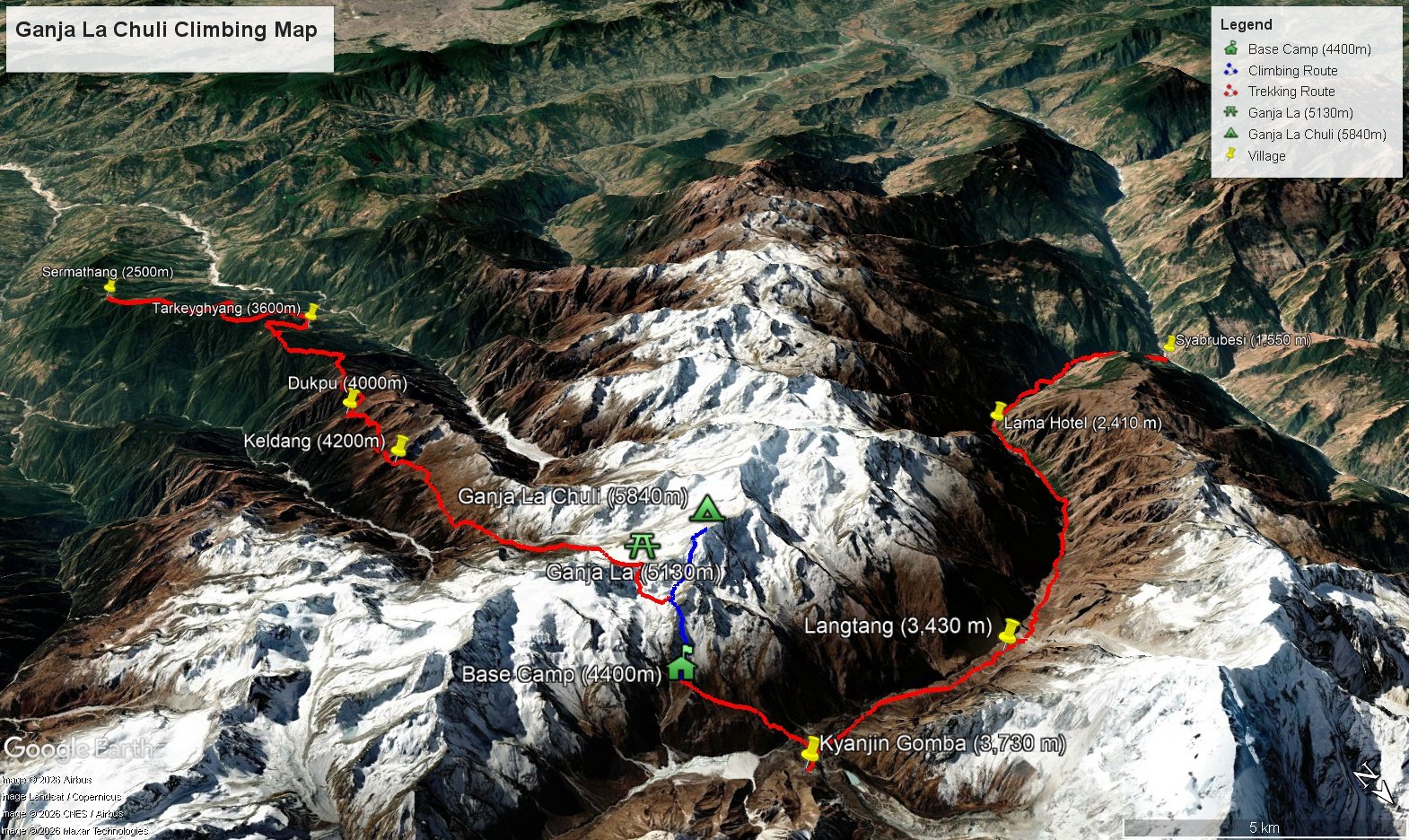
The standard Ganja La Chuli expedition runs 17 days from Kathmandu and back. This includes the drive to Syabrubesi, the Langtang Valley trek through Lama Hotel, Langtang Village, and Kyanjin Gompa, an acclimatisation day at Kyanjin Gompa, the approach to base camp at 4,400m, a rest and preparation day, summit day, the Ganja La Pass crossing to Keldang, the descent through Helambu via Dukpu, Tarke Gyang, and Sermathang, and the drive back to Kathmandu. The point-to-point structure of this itinerary means every day brings new terrain and new scenery, no backtracking, no repeated trails.
Ganja La Chuli is a moderate trekking peak but the combination of summit day and the Ganja La Pass crossing makes it more physically demanding than many peaks at a similar altitude. The primary hazards are altitude sickness on the upper mountain, technical snow and ice terrain on summit day, and avalanche and snow conditions on the Ganja La Pass crossing. The Langtang region is also more remote than it appears on a map helicopter rescue is possible but response times can be longer than in the Everest region. Climbing with experienced, government-licensed guides who carry comprehensive emergency equipment and implement strict acclimatisation protocols is essential. Helicopter rescue insurance is strongly recommended for all climbers on this expedition.
No prior climbing experience is required for Ganja La Chuli, making it one of the most accessible genuine summit experiences in Nepal for first-time mountaineers. The technical demand snow slope climbing, crampon use, and basic ice axe technique are all taught by your guide during the preparation day at base camp before the summit push. What matters most is solid trekking fitness and ideally some prior experience above 3,500m to ensure your body handles altitude well. The Ganja La Pass crossing the day after the summit also requires physical reserves beyond what summit day alone demands. Arriving fit and well-rested at the start of the expedition is the most important preparation you can do.
The summit success rate for Ganja La Chuli is approximately 70–80% for well-prepared climbers who follow the recommended acclimatisation schedule. The relatively modest altitude of 5,840m compared to other trekking peaks makes it more accessible, but the remote setting and the physical demands of the full expedition, including the Ganja La crossing, mean that inadequate preparation still results in failed attempts. Spring and autumn both deliver strong success rates. The most common reasons for unsuccessful attempts are insufficient physical preparation before departure, rushing the acclimatisation schedule at Kyanjin Gompa, and poor weather conditions on summit day.
Temperatures vary across the altitude range of this expedition. At Kyanjin Gompa (3,870m) in autumn, daytime temperatures are 8°C to 15°C with nights dropping to -3°C to -8°C. At base camp (4,400m), overnight temperatures fall to -10°C to -14°C. On summit day at 5,840m, with wind chill factored in, perceived temperatures can drop to -20°C or lower on the exposed upper slopes. The Ganja La Pass crossing at 5,130m the following day is similarly cold and exposed, particularly in the early morning when most teams begin the crossing. A three to four-season sleeping bag, quality down jacket, insulated gloves, balaclava, and glacier goggles are all essential for a safe and comfortable expedition.
Three permits are required for the Ganja La Chuli expedition. First, the Ganja La Chuli or Naya Khang Peak climbing permit issued by the Nepal Mountaineering Association (NMA). Second, the Langtang National Park entry permit, as the entire trekking route through the Langtang Valley passes through this protected national park. Third, a TIMS card is required for the trekking section. The descent through Helambu may also require a local entry registration depending on current regulations. All permit arrangements are handled by your trekking agency as part of the expedition package no individual applications are needed on your part.
Essential technical gear for Chulu West includes mountaineering boots compatible with step-in crampons, crampons, ice axe, climbing harness, helmet, jumar ascender, carabiners, and a belay device. Clothing requirements include a high-quality down suit or equivalent layering system, insulated gloves and overmitts, balaclava, glacier goggles, and high-SPF sunscreen for glacier reflection. A four-season sleeping bag rated to at least -20°C is essential for high camp nights. Most agencies supply shared technical equipment such as fixed ropes and anchors. Personal items including trekking poles, a reliable headlamp with spare batteries, a well-fitted daypack, and a personal hydration system complete the kit list.
The standard route begins with a drive from Kathmandu to Syabrubesi, followed by the Langtang Valley trek through Lama Hotel, Langtang Village, and Kyanjin Gompa. From Kyanjin Gompa, the route ascends to base camp at 4,400m before the summit push to Ganja La Chuli at 5,840m. After descending from the summit, the route crosses the Ganja La Pass at 5,130m and descends into the remote Helambu region through Keldang, Dukpu, Tarke Gyang, and Sermathang before the drive back to Kathmandu. This linear point-to-point route is one of the most complete and varied mountain journeys available at this altitude level in Nepal, combining Tamang culture, high Himalayan terrain, a genuine summit, a dramatic pass crossing, and the peaceful Sherpa villages of Helambu.

Ganja La Pass at 5,130m is one of the more challenging high passes in the Nepal Himalaya and a serious undertaking even for well-acclimatised trekkers. It sits between the Langtang Valley and the Helambu region and is crossed on Day 11 of this itinerary, the day after the summit. The crossing involves steep snow and rocky terrain on both the ascent and descent sides and requires crampons and careful navigation. It is significantly more demanding than passes like Thorong La on the Annapurna Circuit. Most teams begin the crossing early in the morning to ensure enough time for the full descent to Keldang before dark. By the time you reach Ganja La on this itinerary, your body will already be well acclimatised from the summit attempt, which makes the crossing considerably more manageable, but physical reserves and a steady pace remain essential.
Training for Chulu West should begin 3–4 months before departure and prioritize cardiovascular endurance above everything else. Running, cycling, swimming, and weighted stair climbing are all effective ways to build the aerobic base needed for 6–8 hour days at altitude. Leg and core strength training will improve your performance on steep snow slopes and during long descent days. If possible, complete a high-altitude trek above 4,500m in the months before your expedition to experience genuine altitude stress on your body. Practice hiking on uneven terrain with a loaded pack to prepare your joints and balance. On summit day, Chulu West will test your physical limits and your mental resolve in equal measure both need to be trained.